
Endometriosis is one of the most misunderstood yet common gynecological conditions affecting women today. It occurs when tissue similar to the lining of the uterus grows outside the uterus. This misplaced tissue can attach to organs such as the ovaries, fallopian tubes, pelvic lining, and sometimes even the bowel or bladder. Over time it can cause inflammation, pain, scar formation, and fertility problems.
Globally, it affects around 10 percent of women of reproductive age, which means roughly 190 million women worldwide live with this condition.
Homeopathy Specialist for Endometriosis
At Welling Clinic, we approach endometriosis treatment through Homeopathy Assisted Recovery Therapy, developed through more than 22 years of clinical experience in treating women with chronic gynecological disorders including endometriosis. Instead of only suppressing pain or temporarily controlling hormones, the goal is to help the body restore balance, reduce inflammation, regulate cycles, and gradually move toward complete remission of symptoms. Many patients seek this approach when they wish to avoid repeated surgeries, long term hormonal medication, or when fertility becomes a concern.
Our focus is to understand the individual pattern of disease. Every woman with endometriosis presents differently. By individualizing treatment and addressing hormonal balance, immune response, and systemic inflammation, homeopathy aims to assist the body in long term recovery.
Complete cure of endometriosis is possible without repeated surgery which usually many patient undergo.
Call +91 8080 850 950 for a personal assessment
Top 10 Questions Women Ask About Endometriosis
1. What exactly is endometriosis?
Endometriosis is a chronic condition where tissue similar to the uterine lining grows outside the uterus. This tissue responds to hormones during the menstrual cycle just like the uterine lining. However, because it is outside the uterus, the blood and inflammatory reaction cannot exit the body easily, which leads to pain, inflammation, and scarring.
The lesions commonly appear on the ovaries, pelvic lining, and fallopian tubes. In rare cases they may occur in other organs.
2. What are the most common symptoms?
The most common symptom is pelvic pain, particularly during menstruation. But symptoms can vary widely between women.
Common symptoms include:
• Severe menstrual pain
• Chronic pelvic pain even between periods
• Pain during intercourse
• Pain during bowel movements or urination
• Heavy menstrual bleeding
• Bloating and digestive discomfort
• Fatigue
• Difficulty getting pregnant
Many women describe period pain that gets progressively worse over time, which is a key warning sign.
3. How common is endometriosis?
Endometriosis is surprisingly common. Studies show it affects about 1 in 10 women of reproductive age worldwide.
Among women struggling with infertility, the percentage may be even higher. In some studies, up to half of infertile women may have endometriosis.
4. What causes endometriosis?
The exact cause is still not fully understood. Several theories exist:
• Retrograde menstruation, where menstrual blood flows backward into the pelvis
• Genetic predisposition
• Immune system dysfunction
• Hormonal imbalance
• Inflammatory processes
Most experts believe the disease develops through a combination of hormonal, immune, and genetic factors.
5. Can endometriosis cause infertility?
Yes, endometriosis can affect fertility in several ways.
It can create scar tissue that blocks the fallopian tubes. It may damage the ovaries, affect egg quality, or interfere with implantation of the embryo.
However, an important point many women do not know. Not every woman with endometriosis becomes infertile. Many women with mild disease conceive naturally.
6. Why does it take so long to diagnose?
Diagnosis of endometriosis is often delayed because symptoms overlap with normal menstrual pain or digestive disorders.
Historically, the only definitive diagnosis required laparoscopic surgery, which made early diagnosis difficult.
On average, women may wait 4 to 11 years before receiving a correct diagnosis.
Fortunately, newer clinical guidelines increasingly allow doctors to diagnose based on symptoms and imaging rather than surgery alone.
7. How is endometriosis diagnosed?
Doctors usually start with a clinical evaluation and pelvic examination. Tests may include:
• Ultrasound
• MRI scan
• Blood tests for other conditions
The most definitive diagnosis has traditionally been laparoscopy, a minimally invasive surgery where a small camera is inserted into the abdomen.
8. Is there a cure for endometriosis?
Conventional medicine currently considers endometriosis a chronic condition that can be managed but not permanently cured. Treatments usually aim to reduce pain and slow the growth of lesions.
These treatments may include:
• Hormonal therapy
• Pain medication
• Surgical removal of lesions
• Fertility treatments
However, recurrence after surgery is not uncommon, which is why many women look for integrative or long term approaches.
9. Can lifestyle changes help?
Lifestyle changes can support symptom management. These may include:
• Anti inflammatory diet
• Regular exercise
• Stress reduction
• Adequate sleep
While lifestyle measures alone usually cannot eliminate the disease, they can reduce inflammation and help improve overall well being.
10. When should you see a doctor?
You should seek evaluation if you experience:
• Period pain that interferes with daily life
• Pain during sex or bowel movements
• Difficulty conceiving
• Chronic pelvic pain
Early evaluation is important because untreated endometriosis can gradually lead to worsening pain, cyst formation, and fertility issues.
Start Your Recovery Today
Endometriosis is not simply “bad period pain.” It is a complex inflammatory disease that can affect physical health, fertility, emotional well being, and quality of life.
Awareness and early diagnosis can make a significant difference in outcomes.
For women looking for a natural, individualized, and long term recovery approach, Homeopathy Assisted Recovery Therapy at Welling Clinic focuses on restoring balance within the body rather than only suppressing symptoms.
With over two decades of experience in treating chronic gynecological conditions, many patients seek this approach when they want to move toward lasting relief and improved reproductive health.
If you suspect symptoms of endometriosis, early evaluation and the right treatment strategy can make a profound difference in your recovery journey.
Author: Dr.Sourabh Welling
Founder – Welling Homeopathy Speciality Clinics.
 This page is medically reviewed by Dr. Sourabh Welling, a practicing homeopathy doctor and founder of Welling Homeopathy, Mumbai. He has extensive experience in treating chronic and difficult conditions using individualized homeopathic treatment.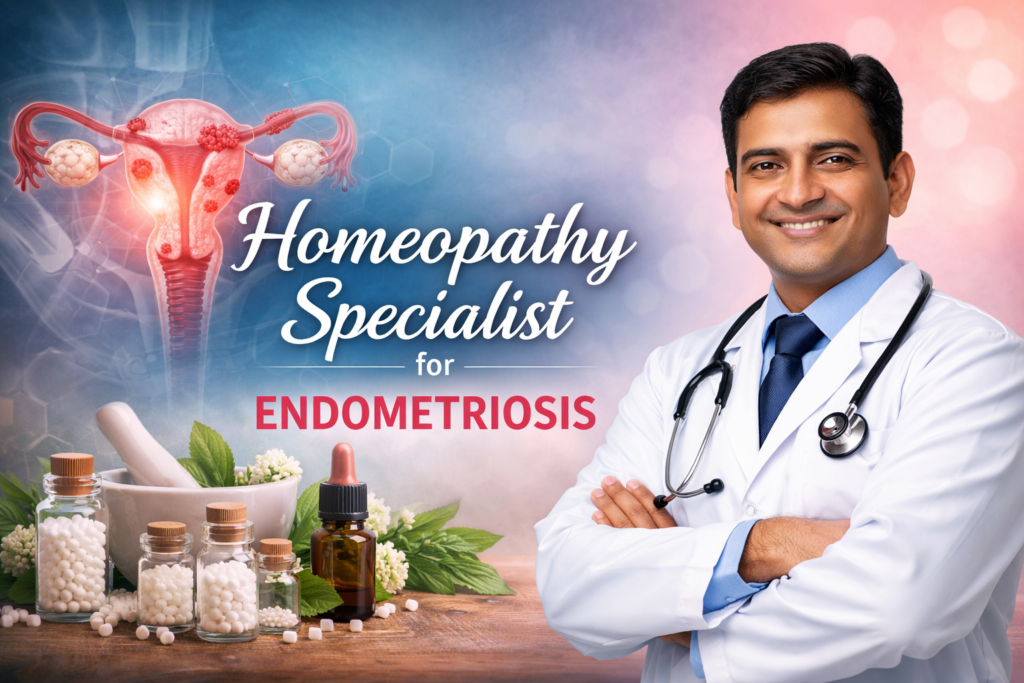
 India’s #1 Homeopathy Center