
If your IVF cycle failed, you are not alone — and you are not out of options. This guide explains why IVF fails, what the medical research actually says, and what thousands of couples do next when conventional fertility treatments stop working.
Why IVF Failure Is More Common Than You Think?
The global IVF success rate per cycle sits between 30% and 40% — which means more than 60% of IVF cycles fail. In India, the average live birth rate per IVF cycle is even lower, hovering around 25–30% depending on the clinic and age group.
Yet most fertility clinics present IVF as the natural conclusion to infertility treatment — the “final word.” The implication is that if IVF fails, nothing else can help.
That is not accurate. And for the thousands of couples who come to Welling Homeopathy after one, two, or even five failed IVF attempts, it is important that they understand why the cycles failed — because that root cause is precisely what our CUREplus treatment protocol addresses.
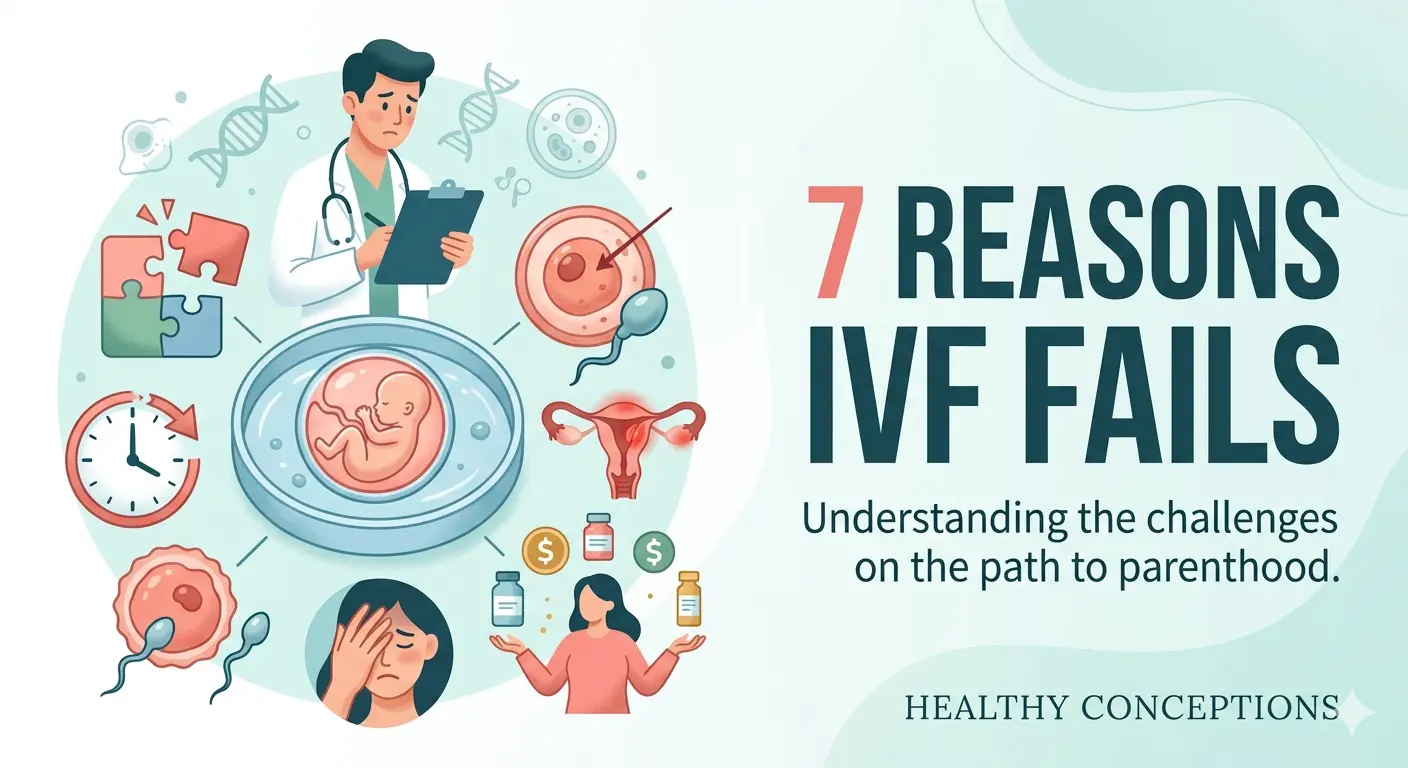
Let us walk through the seven most common, medically documented reasons IVF fails — and what each one means for your path forward.
Reason 1: Poor Egg Quality or Low Ovarian Reserve
Egg quality is arguably the single biggest determinant of IVF success. Poor egg quality leads to:
- Failed fertilisation even after ICSI
- Low-grade or fragmented embryos
- Embryos that fail to develop to the blastocyst stage
- Implantation failure even when embryos “look good” under the microscope
Low ovarian reserve — measured by Anti-Müllerian Hormone (AMH), Antral Follicle Count (AFC), and FSH levels — means the ovaries produce fewer eggs during stimulation. This directly reduces the number of viable embryos available.
Women most at risk:
- Women over 35 (age is the single largest factor in egg quality decline)
- Women with a history of ovarian surgery, endometriosis, or chemotherapy
- Women with premature ovarian insufficiency (POI)
- Women with very low AMH (below 1.0 ng/mL)
What Most Clinics Do — And Why It Falls Short
The conventional response to poor egg quality is:
- Increasing stimulation doses (which can cause OHSS and still yield poor results)
- Switching to donor eggs
- Banking embryos over multiple cycles
These approaches treat the symptom — the low number of eggs — without addressing why the ovaries are underperforming. Ovarian reserve decline is influenced by oxidative stress, mitochondrial dysfunction, poor blood supply to the ovaries, and systemic hormonal imbalance — all of which are modifiable.
What You Can Do
At Welling Homeopathy, our CUREplus protocol for low ovarian reserve focuses on improving follicular blood flow, reducing oxidative damage to oocytes, and supporting the hypothalamic-pituitary-ovarian (HPO) axis. Patients with AMH as low as 0.3 ng/mL have conceived naturally after 4–6 months of targeted constitutional treatment.
Reason 2: Sperm Quality Problems That Go Undetected
The Hidden Male Factor
A standard semen analysis measures count, motility, and morphology — but these numbers do not tell the whole story. A man can have a “normal” semen analysis and still have:
- High sperm DNA fragmentation — damaged genetic material inside sperm that fertilises the egg but causes early embryo arrest
- Reactive oxygen species (ROS) overload — oxidative stress in sperm that is invisible on a basic test
- Anti-sperm antibodies — the immune system attacking sperm before they can fertilise
- Epigenetic defects — abnormal gene expression patterns passed on to embryos
Research published in Human Reproduction found that sperm DNA fragmentation above 25–30% significantly reduces IVF success rates, even when fertilisation occurs normally.
Why This Causes IVF to Fail
When a sperm with high DNA fragmentation fertilises an egg, the resulting embryo may:
- Develop normally for 2–3 days and then arrest
- Fail to reach blastocyst stage
- Implant briefly, then result in biochemical pregnancy (a positive test that does not continue)
Many couples receive no explanation for recurrent embryo arrest — the male factor, particularly DNA fragmentation, is frequently overlooked.
What You Can Do
Request a Sperm DNA Fragmentation Index (DFI) test if it has not been done. At Welling Homeopathy, we treat male factor infertility with constitutional homeopathic medicines that address the systemic root — whether that is varicocele, recurrent infections, hormonal imbalance, or oxidative stress — and we typically see measurable improvement in semen parameters within 90–120 days.
Reason 3: Failed Embryo Implantation
When the Embryo Is Good but the Uterus Is Not Ready
Implantation failure is one of the most frustrating outcomes in IVF — especially when the embryo was graded highly. The problem is not the embryo. The problem is the environment it is being placed into.
Causes of recurrent implantation failure include:
1. Thin or Poorly Receptive Endometrium The uterine lining must reach at least 7–8 mm with a trilaminar (triple-line) pattern. Thin endometrium — often caused by poor uterine blood flow, previous uterine surgeries, or prolonged hormonal treatments — prevents proper attachment.
2. Elevated Natural Killer (NK) Cell Activity Uterine NK cells play a crucial role in implantation, but when their activity is elevated, they reject the embryo as “foreign tissue.” This is an immune-mediated cause of implantation failure that many clinics do not test for.
3. Progesterone Resistance Even when progesterone is given as luteal phase support, some women’s uteruses do not respond adequately — a condition called progesterone resistance, linked to chronic endometritis and endometriosis.
4. Displaced Window of Implantation (WOI) The endometrium is receptive to an embryo only during a specific 24–48-hour window, which varies by individual. In some women, this window is displaced, meaning the embryo is transferred when the endometrium is not yet — or is no longer — receptive.
What You Can Do
Specialised tests available at advanced fertility centres include the ERA test (Endometrial Receptivity Array), EMMA/ALICE tests (for endometrial microbiome and infections), and uterine NK cell testing. At Welling Homeopathy, we address implantation failure through a combination of remedies that improve endometrial blood flow, modulate immune response, and support progesterone sensitivity.
Reason 4: Uterine Abnormalities and Endometrial Issues
Structural and Tissue Problems Inside the Uterus
Even when the endometrium appears adequate in thickness, structural problems within the uterus can physically prevent embryo implantation or cause early miscarriage after initial implantation:
Submucosal Fibroids Fibroids that project into the uterine cavity alter the shape of the endometrial surface and produce local inflammation, both of which impair implantation. Studies show submucosal fibroids reduce IVF success rates by up to 50%.
Endometrial Polyps Polyps — even small ones — create a mechanical barrier to implantation and may be missed on routine ultrasound. They are detected and removed through hysteroscopy.
Adenomyosis Adenomyosis, where endometrial tissue grows into the uterine muscle wall, causes a stiff, poorly receptive uterus. It is strongly associated with implantation failure and early miscarriage in IVF cycles. It is also commonly misdiagnosed or entirely missed.
Uterine Septum A septum dividing the uterine cavity reduces the available implantation area and carries poor blood supply, making it hostile to embryo attachment.
Asherman’s Syndrome Intrauterine adhesions — often from previous D&C procedures, infections, or surgeries — reduce the functional area of the endometrium.
What You Can Do
If uterine abnormalities have been identified, hysteroscopy is typically recommended to address structural issues before the next IVF attempt. For conditions like adenomyosis, endometriosis, and fibroids, our CUREplus protocol has shown consistent results in reducing lesion size, improving uterine receptivity, and in many cases, enabling natural conception — without surgery.
Reason 5: Chromosomal Abnormalities in Embryos
The Genetic Cause Most Couples Are Not Told About
Chromosomal aneuploidy — where an embryo has an abnormal number of chromosomes — is the most common reason for IVF failure, early miscarriage, and failed implantation. Studies using Preimplantation Genetic Testing for Aneuploidy (PGT-A) consistently find that:
- In women under 35, approximately 30–40% of embryos are aneuploid
- In women aged 38–40, this rises to 50–60%
- In women over 42, 70–80% or more of embryos may be chromosomally abnormal
When an aneuploid embryo is transferred, it either fails to implant, or implants briefly and then miscarries (often before a heartbeat is detected).
Why This Happens
Chromosomal errors in embryos originate primarily in the egg — specifically in the meiotic divisions that occur as the egg matures. These errors increase with age but are also influenced by:
- Oxidative stress damaging the egg’s mitochondria
- Environmental toxin exposure
- Nutritional deficiencies (particularly folate, CoQ10, and inositol)
- Systemic inflammatory conditions
What You Can Do
PGT-A testing can identify chromosomally normal embryos before transfer, significantly improving the chances of success in women with advanced maternal age or recurrent IVF failure. Alongside this, addressing the underlying drivers of chromosomal error — through targeted nutritional support, antioxidant therapy, and constitutional homeopathic treatment — can improve egg quality ahead of future cycles or natural conception attempts.
Reason 6: Lifestyle and Environmental Factors Affecting IVF Success
What Science Says About the Role of Daily Life in IVF Outcomes
This is a category most clinics mention in passing — “try to reduce stress, eat well, sleep more” — but the science behind it is far more specific and compelling than this dismissal suggests.
Obesity and High BMI Women with a BMI above 30 have significantly lower IVF success rates due to altered hormonal signalling, poorer response to stimulation, and higher risk of implantation failure. Men with obesity show lower sperm quality and higher DNA fragmentation.
Smoking Even light smoking reduces ovarian reserve, accelerates egg quality decline, and reduces IVF success rates by 30–40%. Passive smoking exposure has similar, if lesser, effects.
Endocrine-Disrupting Chemicals (EDCs) BPA (in plastics), phthalates (in cosmetics and food packaging), pesticides, and parabens directly interfere with oestrogen and progesterone signalling. Research shows measurable negative effects on egg quality, sperm quality, and implantation when exposure is high.
Chronic Psychological Stress Cortisol elevation from chronic stress suppresses GnRH pulsatility, disrupts the HPO axis, and elevates uterine NK cell activity — all of which impair IVF success. A landmark study in Human Reproduction found that women with the highest alpha-amylase levels (a stress biomarker) were 29% less likely to achieve pregnancy.
Poor Sleep Melatonin is produced during sleep and acts as a powerful antioxidant within the follicular environment, protecting eggs from oxidative damage. Disrupted sleep significantly reduces melatonin availability within the ovary.
Thyroid Dysfunction Subclinical hypothyroidism (TSH above 2.5 mIU/L) is strongly associated with implantation failure and early miscarriage after IVF. Many women with TSH between 2.5 and 4.5 are told their thyroid is “normal” — but optimal thyroid function for fertility requires TSH below 2.5.
What You Can Do
A rigorous lifestyle overhaul — 90 days before a planned IVF cycle or natural conception attempt — can meaningfully shift outcomes. At Welling Homeopathy, we provide detailed lifestyle guidance as part of every CUREplus fertility programme, including dietary frameworks, toxin reduction protocols, and specific recommendations for sleep, movement, and stress management.
Reason 7: The IVF Protocol Was Wrong for Your Body
Not All Protocols Work for All Bodies
IVF is not a single treatment — it is a category of treatments, and the protocol chosen must match the individual’s hormonal profile, ovarian reserve, and response history.
Common protocol mismatches include:
Over-stimulation in Poor Responders Women with low AMH or advanced age are sometimes given the same high-dose stimulation protocols used for normal responders. The ovaries, already functioning at reduced capacity, may fail to respond — or produce only low-quality eggs under hormonal stress they cannot handle.
Under-stimulation in High Responders Women with PCOS or high AFC may be under-managed and develop OHSS (ovarian hyperstimulation syndrome), which can damage the egg cohort, require cycle cancellation, or prevent fresh embryo transfer entirely.
Premature LH Surge In some protocols, the trigger shot is timed incorrectly, leading to premature ovulation before egg retrieval — or incomplete final egg maturation.
Inadequate Luteal Phase Support Insufficient progesterone supplementation after embryo transfer creates an inhospitable uterine environment in the critical days following implantation.
Fresh Transfer When Frozen Was Appropriate Some evidence suggests that in stimulated cycles where the body’s oestrogen peaks very high, a frozen embryo transfer in a subsequent natural cycle may be preferable — giving the uterus a chance to return to its natural state. Not all clinics default to this.
What You Can Do
If you have had a failed IVF cycle, request a detailed debrief from your clinic — specifically about why that protocol was chosen and what would be changed. If answers are vague or dismissive, a second opinion from a different reproductive endocrinologist is entirely reasonable. Many couples who “failed IVF” at one clinic succeed after protocol modification at another.
What Can You Do After IVF Failure?
After a failed IVF cycle, couples face a bewildering array of choices — and often, no clear direction from their treating clinic beyond “try again.” Here is a structured framework for what to consider:
Step 1: Get a Root Cause Review
Do not proceed to another IVF cycle without understanding why the last one failed. Ask your clinic for:
- A detailed embryology report (fertilisation rates, embryo grades, development timeline)
- Sperm DNA fragmentation test if not already done
- Uterine evaluation (saline sono, hysteroscopy if warranted)
- Immunological workup (NK cells, antiphospholipid antibodies)
- ERA / EMMA / ALICE if implantation failure is suspected
- Updated AMH, AFC, and day 2/3 FSH
Step 2: Address the Root Cause Before the Next Attempt
This is the step most couples skip — and it is the most important one. Rushing into a second or third cycle without addressing the underlying problem produces the same result.
Step 3: Explore All Available Options
Options after failed IVF include:
- Repeat IVF with modified protocol — valid if the root cause has been identified and addressed
- IVF with PGT-A — reduces the risk of aneuploid embryo transfer
- Donor egg IVF — appropriate if ovarian failure is confirmed and irreversible
- Adoption or surrogacy — a deeply personal choice, valid and worthy of respect
- Natural conception with medical support — often more possible than couples are told, particularly with integrative treatment
- Homeopathic fertility treatment — a root-cause approach that has helped thousands of couples conceive naturally after failed IVF
How Homeopathy Addresses the Root Causes of IVF Failure
At Welling Homeopathy, our CUREplus Fertility Programme was developed specifically for patients who have not responded to conventional infertility treatment — including those who have experienced one or more failed IVF cycles.
Our approach is fundamentally different from IVF in one important respect: we treat the person, not the cycle. Rather than stimulating the ovaries externally and harvesting eggs, we focus on the systemic and constitutional factors that determine whether the ovaries, uterus, sperm, and embryos are functioning at their best.
What CUREplus Addresses
| Root Cause | CUREplus Approach |
|---|---|
| Low ovarian reserve / Poor egg quality | Constitutional remedies to improve ovarian blood flow, follicular environment, and HPO axis regulation |
| Sperm DNA fragmentation | Targeted treatment for oxidative stress, varicocele, and systemic hormonal imbalance |
| Recurrent implantation failure | Remedies addressing endometrial receptivity, immune modulation, and progesterone sensitivity |
| Adenomyosis / Endometriosis | Long-term constitutional treatment to reduce ectopic tissue, pain, and inflammation |
| Fibroids | Targeted treatment to reduce fibroid size and uterine congestion |
| PCOS | Hormonal regulation, insulin sensitivity, and menstrual cycle normalisation |
| Thyroid dysfunction | Constitutional correction of thyroid-immune axis imbalance |
| Psychological stress | Constitutional remedies addressing the neuro-endocrine axis |
Why Homeopathy Works Here
Homeopathy does not suppress symptoms or force ovulation. Instead, carefully selected constitutional remedies stimulate the body’s own regulatory intelligence — improving the quality of eggs and sperm over 3–6 months, normalising the uterine environment, and restoring the hormonal balance that makes natural conception (or dramatically more successful IVF) possible.
Patients at Welling Homeopathy come from across India and internationally — from the United Kingdom, United States, UAE, Singapore, Canada, and Australia. Our international online consultation service means that distance is never a barrier to beginning treatment.
Our Success With Post-IVF Patients
Over more than 15 years of clinical practice, we have seen:
- Natural conceptions in women with AMH as low as 0.2 ng/mL
- Successful pregnancies in women who had 3–5 previous IVF failures
- Significant fibroid reduction without surgery in women scheduled for hysterectomy
- Normalisation of sperm DNA fragmentation within 90–120 days of treatment
- Improvement in endometrial thickness and pattern in women with recurrent thin endometrium
Real Patient Stories: What Worked When IVF Didn’t ?
Mrs. R.K., 38, Mumbai
“After three failed IVF cycles and an AMH of 0.6, every clinic told me donor eggs were my only option. I came to Dr. Welling as a last attempt. After eight months of CUREplus treatment, I conceived naturally and delivered a healthy boy. I still can’t fully believe it.”
Mrs. P.S., 34, Dubai (Online Consultation)
“My husband’s sperm DNA fragmentation was 42% — no one had ever tested for this. Four IVF cycles had failed. After four months of treatment, his DFI came down to 16%. We did one more IVF cycle with the same clinic and it worked the first time. We believe the treatment made all the difference.”
Mrs. A.M., 41, Bangalore
“I had adenomyosis and two failed IVF transfers. I couldn’t tolerate the hormonal medication anymore. Homeopathic treatment reduced my pain significantly within three months, and my endometrial thickness improved from 5.2 mm to 8.7 mm by the sixth month. I became pregnant naturally in month eight.”
FAQs: Your Most Common Questions After Failed IVF
Q: How many IVF cycles should I try before considering alternatives?
There is no universal answer. Most reproductive endocrinologists suggest a maximum of 3–4 cycles with the same protocol before a thorough re-evaluation. However, if no root cause analysis has been done and the protocol has not changed, repeating the same approach is unlikely to yield different results. We recommend a root cause review after every failed cycle — not just after three or four.
Q: Can I get pregnant naturally after a failed IVF cycle?
Yes — and this happens more often than the fertility industry acknowledges. Many couples conceive naturally after failed IVF, particularly when the underlying causes are addressed. Natural conception after IVF failure is well-documented in medical literature, with some studies suggesting it occurs in up to 17–25% of couples who discontinue treatment.
Q: Should I change clinics after a failed IVF cycle?
If you feel your concerns are not being heard, your questions are not being answered clearly, or you have had multiple failures with the same protocol and no changes have been proposed — a second opinion is entirely warranted. You are not obligated to remain with one clinic.
Q: How long should I wait between IVF cycles?
Most clinics recommend at least one full menstrual cycle (4–6 weeks) of recovery. However, if significant lifestyle changes, nutritional optimisation, or a specific treatment course is being undertaken — a 3–6 month period between cycles is often more beneficial than rushing into another cycle.
Q: Is it normal to feel grief, depression, or anger after IVF failure?
Completely normal — and deeply important to acknowledge. Failed IVF is a genuine loss. The physical toll of the process (injections, procedures, hormonal fluctuations), combined with the emotional weight of hope and disappointment, is significant. We recommend speaking with a counsellor who specialises in fertility-related grief, and not minimising your experience. Emotional wellbeing is not separate from fertility — it is directly connected to it.
Q: How is Welling Homeopathy’s approach different from other homeopathy clinics?
Our CUREplus protocol is developed specifically for complex fertility cases — including post-IVF failure — over 15+ years of clinical practice and tens of thousands of patient consultations. We do not use generalised or symptomatic prescribing. Every case undergoes a detailed constitutional analysis, and treatment is personalised to the individual’s complete physical, hormonal, and psychological picture. We also work in parallel with conventional diagnosis — we require all recent test results and work with your existing medical history, not against it.
Ready to Take the Next Step?
If you have experienced IVF failure and are looking for a comprehensive, root-cause approach to fertility, we invite you to speak with us.
Welling Homeopathy — CUREplus Fertility Programme
📍 Clinics in Andheri, Mahim, and Thane, Mumbai 🌐 International Online Consultations Available 📞 +91 8080 850 950 🌐 www.wellinghomeopathy.com
Patients consult with us from across India, the United Kingdom, United States, UAE, Canada, Australia, Singapore, and more than 50 countries worldwide.