
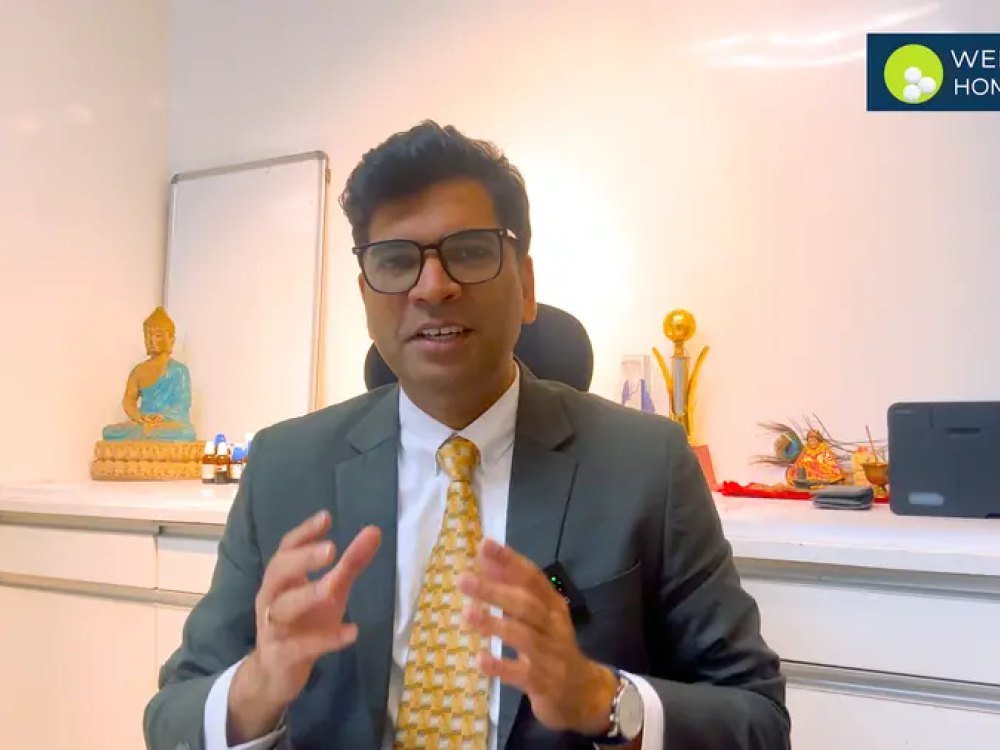
Cancer care has advanced a great deal, yet many people look for supportive approaches that work alongside surgery, chemotherapy, radiation and other oncology treatment. At Welling Homeopathy in Mumbai we follow a four-step protocol, part of our CUREplus approach, that is built around the individual rather than the diagnosis alone: diet, supplements, a constitutional homeopathic medicine and, where needed, an organ-specific medicine. This page explains each step, what a first consultation involves, and how we work with your oncologist.
Looking for supportive care alongside your cancer treatment?
Share your diagnosis, reports and current treatment, and our specialists will plan supportive homeopathic care alongside your oncology treatment, in person at our Mumbai clinics or online from anywhere.
Call +91 8080 850 950 for a 1:1 personal consultation with our experts today.
The 4-step protocol at a glance
- Step 1, Diet: a personalised plan based on your metabolic type, the organ affected and your treatment.
- Step 2, Supplements: vitamins, minerals, trace elements and antioxidants chosen for your needs, not a standard bundle, and cleared with your oncologist.
- Step 3, Constitutional medicine: a homeopathic medicine selected for you as a whole person after a detailed interview.
- Step 4, Organ-specific medicine: added only where needed, for example in advanced disease when vitality is low.
- Always: complementary to, never a substitute for, surgery, chemotherapy, radiotherapy or follow-up with your oncologist.
Who this care is for
This supportive programme is for people who have been diagnosed with cancer and want help with their general strength, nutrition and wellbeing during and after oncology treatment, and for family members who care for them. It is offered in addition to the treatment your cancer specialists have planned. We do not ask anyone to delay, skip or stop conventional treatment.
The four steps of the protocol
1. Diet
Dietary advice is personalised. We look at each person’s metabolic type, including their constitution, digestion, energy pattern and the organ affected, and suggest a plan that suits them, which may differ widely from one patient to another (for example higher in protein for one person and higher in complex carbohydrate for another). The plan is adapted to side effects such as nausea, taste changes or a sore mouth, and to blood counts during treatment.
2. Supplements
Vitamins, minerals, trace elements and antioxidants are chosen according to the person’s needs and the organ involved, not given as a standard bundle. Some supplements can interfere with chemotherapy or radiation, so the list is always shared with your oncologist.
3. Constitutional homeopathic medicine
This is the core of the protocol. After a detailed interview covering the present illness, past health history, temperament and lifestyle, a constitutional homeopathic medicine is selected for the whole person and reviewed at follow-up.
4. Organ-specific homeopathic medicine
A supporting medicine directed at the affected organ is added only where needed, for example in advanced disease when vitality is low.
What happens at your first consultation
- Bring your diagnosis, biopsy or pathology report, scans, and your oncologist’s treatment plan.
- Bring a list of every medicine and supplement you take, including those from other systems of medicine.
- The doctor takes a detailed history of your illness, appetite, digestion, sleep, energy, emotions and family history.
- A personal plan is made: diet, supplements and homeopathic medicines, with a follow-up schedule.
- With your permission, we coordinate with your oncologist, and we ask you to tell us about any change in your treatment.
Common concerns during treatment and general measures
People undergoing cancer treatment commonly ask for help with the following. The measures below are general; the right approach depends on your treatment and your oncologist’s advice.
| Concern | General measures | Tell your oncologist promptly if |
|---|---|---|
| Nausea and poor appetite | Small, frequent meals; cold or room-temperature foods; ginger tea; sipping fluids | Vomiting lasts more than a day, or you cannot keep fluids down |
| Fatigue | Gentle walking, rest between activities, enough protein, regular sleep | Fatigue is sudden, severe or comes with breathlessness |
| Mouth sores and taste changes | Soft, bland foods; rinsing with salt water; good oral hygiene | Sores prevent eating or drinking, or there is fever |
| Constipation or diarrhoea | Fluids, fibre or low-fibre foods as appropriate, small meals | Diarrhoea is severe or bloody, or constipation lasts more than 3 days |
| Anxiety and poor sleep | Relaxation, breathing exercises, regular routine, counselling | You feel hopeless or have thoughts of self-harm |
Working alongside your oncologist
Homeopathic care is complementary. It is not a substitute for surgery, chemotherapy, radiotherapy or regular follow-up with your oncologist. Please tell every doctor involved in your care about all supplements and medicines you take, because some supplements can interact with cancer treatment. During chemotherapy, a fever of 38°C (100.4°F) or higher, bleeding, severe breathlessness or uncontrolled vomiting needs urgent medical attention at your cancer hospital.
What homeopathy can and cannot do
Homeopathy has not been shown to treat cancer itself or to extend survival. It is used here as supportive, individualised care to help people with general wellbeing, nutrition and the strain of illness and treatment, and results vary from person to person. We will tell you honestly what we can offer in your situation.
To learn more, see our pages on homeopathy specialist for cancer, understanding cancer care at Welling Homeopathy, our speciality cancer clinic, and cancer guides for Mumbai.
Frequently asked questions about supportive cancer care
1. What is the 4-step cancer protocol at Welling Homeopathy?
It is a supportive protocol, part of our CUREplus approach, made up of personalised diet, individualised supplements, a constitutional homeopathic medicine and, where needed, an organ-specific medicine, all offered alongside your oncology treatment.
2. Can I take homeopathic medicines during chemotherapy or radiotherapy?
Many people do. Please tell your oncologist about every medicine and supplement you take, and do not stop or change any cancer treatment on your own.
3. Is homeopathy a substitute for cancer treatment?
No. Surgery, chemotherapy, radiotherapy and other treatments recommended by your oncologist are the main treatments. Homeopathy is complementary supportive care only.
4. Why are supplements individualised?
Different cancers and treatments change what the body needs, and some supplements, especially high-dose antioxidants, can interfere with treatment. Choosing them individually and sharing the list with your oncologist is safer than a standard bundle.
5. What should I bring to my first consultation?
Bring your diagnosis and pathology reports, scans, your oncologist’s treatment plan, and a list of all medicines and supplements.
6. Can I consult online?
Yes. Many patients consult online from other cities and countries and share their reports electronically.
7. Do you offer care for all types of cancer?
We offer supportive care for people with many types of cancer, as described on our cancer pages. The plan is always individual and is coordinated with your oncology team.
8. How often are follow-ups?
Follow-ups are arranged according to your treatment schedule and how you are feeling. The doctor will agree a schedule with you at the first visit.
Related Reading
- Homeopathy Specialist for Cancer
- Understanding Cancer Care at Welling Homeopathy
- Speciality Homeopathic Cancer Clinic
- Cancer Treatment Guides for Mumbai
- Treatment of Depression
- 10 Best Homeopathic Medicines for Treatment of Stress
To consult Welling Homeopathy experts, call +91 80 80 850 950.
Disclaimer: this page is for information only and is not a substitute for professional medical advice, diagnosis or treatment. Results vary from person to person.
