
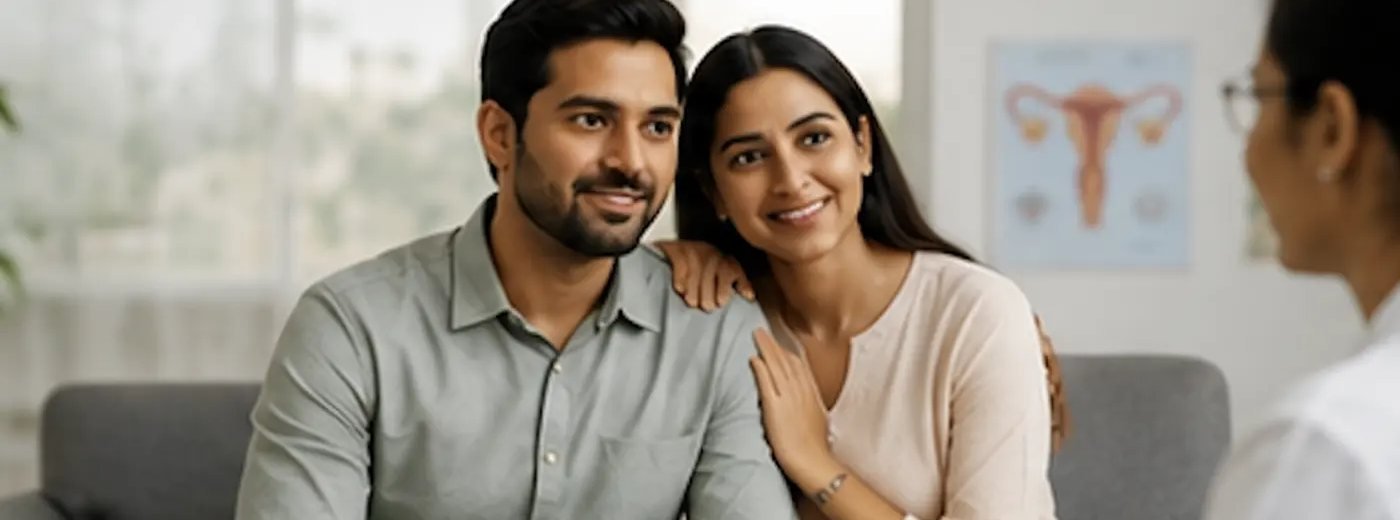
When a couple experiences a failed IVF cycle, it can be a difficult and emotionally challenging time. Couples may feel disappointment, frustration, and sadness.
Failed IVF cycle? Plan your next step with us.
Share your reports and our specialists will plan your personal treatment, in person at our Mumbai clinics or online from anywhere. Your first consultation and assessment is free. Welling’s HART protocol can save up to 90% of the usual IVF cost, and help you conceive naturally.
Common Causes of Why You Failed IVF Cycle?
There are several potential causes for failed IVF (in vitro fertilization) cycles in couples. Some of the most common causes include:
- Poor egg quality: This can be due to a variety of factors such as age, genetic issues, or previous medical conditions.
- Low sperm count or poor sperm motility: This can be due to genetic issues, hormonal imbalances, or previous medical conditions.
- Uterine or cervical abnormalities: These can include issues such as polyps, fibroids, or scarring that can prevent the implantation of an embryo.
- Immunological issues: Some couples may have an immune response that attacks and kills sperm or embryos, making it difficult to achieve a pregnancy.
- Lifestyle factors: Factors such as smoking, excessive alcohol consumption, and obesity can all negatively impact IVF success rates.
- Embryo Quality: Sometimes the embryos produced in lab may not be of the best quality, hence the implantation may fail.
- Embryo Transfer: Sometimes the transfer of the embryo may not be done properly leading to failed implantation.
Low Endometrial Thickening
Endometrial thickening refers to the process by which the lining of the uterus (the endometrium) becomes thicker and more receptive to the implantation of an embryo. In order for a pregnancy to occur, the embryo must attach and implant itself in the endometrium.
If the endometrium is too thin, it may not be receptive enough to allow for the implantation of an embryo. This can be caused by a variety of factors such as hormonal imbalances, age-related issues, or previous medical conditions. In some cases, low endometrial thickness may be caused by a lack of adequate estrogen, which is necessary for endometrial growth and development.
When endometrial thickness is too low, the implantation rate of the embryos is poor which leads to a failed IVF cycle. This condition can be diagnosed by ultrasound, and treatment options can include hormone therapy to promote endometrial growth, or using a donor egg or surrogate to carry the pregnancy.
It’s important to note that low endometrial thickness is just one of many potential causes of failed IVF, and it’s important to work closely with a reproductive endocrinologist to identify any issues and develop a treatment plan that is tailored to your individual needs.
Why Welling Homeopathy Assisted Reproduction Therapy After a Failed IVF?
- Only proven Homeopathy treatment for Infertility to remove the root cause of infertility in men and women,
- First and the largest Homeopathic specialty Infertility clinic in the world – get benefited from our experience in conceiving naturally?
- Have helped over 10,200 couples have a baby naturally from 108 countries,
- There is always a natural way to conceive even in seemingly hopeless diagnoses,
Call +91 8080 850 950 to book an appointment or consult & order online.
Welling Homeopathy for assisted reproduction therapy focuses on addressing the underlying causes of infertility and hormonal imbalances that may contribute to a failed IVF cycle. Homeopathic remedies are chosen based on a person’s individual symptoms and medical history, and help balance the body’s hormonal system, improve egg and sperm quality, and support the uterus to be receptive for implantation.
If you too want to conceive naturally without going through the troublesome and sometimes painful process of IVF, meet our specialist for an assessment to know if our specially formulated Homeopathy treatment for IVF alternative can help you conceive naturally.
It’s important to note that IVF is a complex process and many factors can contribute to a failed cycle. It’s important to work closely with a reproductive endocrinologist to identify any potential issues and develop a treatment plan that is tailored to your individual needs.
More on failed IVF and your next step
- Things You Must Do After a Failed IVF Cycle
- Common Causes of Why You Failed IVF Cycle?
- Why Did Implantation Fail? What to Do Next and Can You Get Pregnant Naturally?
- What Is The Success Rate Of IVF? By Age, By Cycle and How To Improve It
- Beyond IVF: What Are Best Natural Alternatives To IVF?
- What is IVF Treatment? Steps, Success Rate, Cost, Risks and a Natural Alternative
- Is There a Treatment for Poor Ovarian Reserve?
- Homeopathy Infertility Treatment: HART, a Proven Way to Conceive Naturally
Help after a failed IVF cycle at Welling Homeopathy, Mumbai
If you are looking for help with help after a failed IVF cycle in Mumbai, you can consult Dr. Sourabh Welling, M.D., and the senior specialists of Welling Homeopathy at our Mumbai clinics, or consult online from anywhere in India and abroad. Bring your cycle summary and reports to the first consultation. See the Contact page for current clinic addresses and hours, or call +91 8080 850 950.
Why IVF fails: more questions answered
1. What is the most common reason an IVF cycle fails?
Embryo quality, most often because of chromosomal abnormalities, which become more common as the egg ages.
2. Can a good-looking embryo still fail to implant?
Yes. Appearance in the lab does not show the chromosomes or the receptivity of the lining, so even good-grade embryos may not implant.
3. Does stress cause IVF to fail?
Stress is not a proven cause of failure, but it affects sleep and wellbeing, so support and relaxation are worth building in.
4. Does age affect the chance of IVF failure?
Yes. The age of the eggs is the main factor, with success falling after 35 and sharply after 40.
5. What is the next step after IVF fails?
Review the cycle with your clinic, repeat key tests, and decide with your doctor between another cycle, a changed protocol, donor eggs or a natural approach.
