
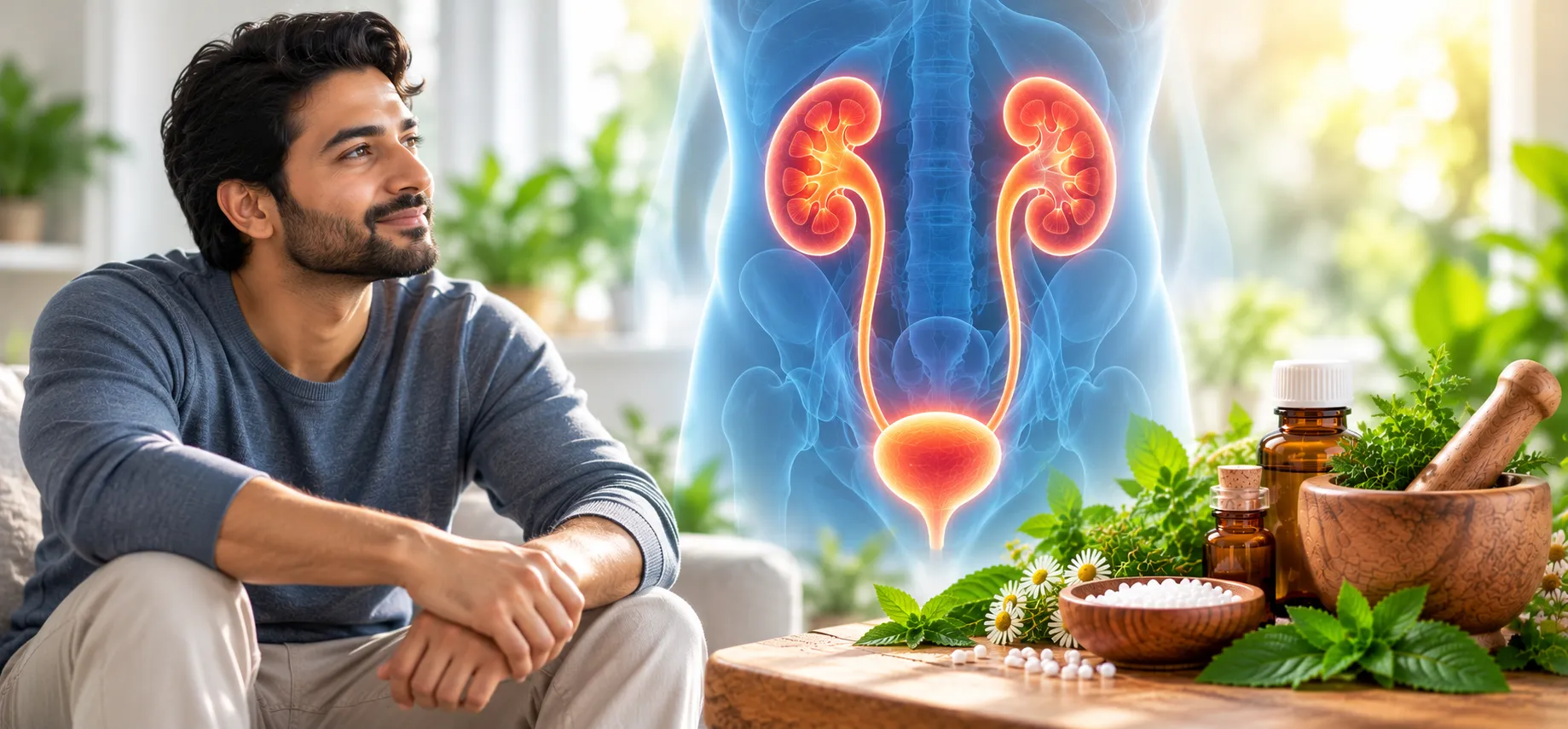
Kidney stones are hard deposits of minerals and salts that form in the kidneys and can cause severe, wave-like pain as they move down the urinary tract. This page explains the symptoms, causes, when to see a doctor and the homeopathic approach to kidney stones at Welling Homeopathy.
Wondering which of these medicines is right for you?
Every person with kidney stones (renal calculi) is different, and so is the medicine that works best for them. To discover the best-suited homeopathic medicines for kidney stones (renal calculi) for you, consult our experts. They will study your symptoms, your past treatment history and your personality, and then find the homeopathy medicines that suit you best.
Call +91 8080 850 950 for a 1:1 personal consultation with our experts today.
Quick answers: homeopathy for kidney stones (renal calculi)
- What it is: Hard crystal deposits formed from minerals and salts in the kidney.
- Typical sign: Sudden severe pain in the flank spreading to the groin, often with nausea.
- See a doctor if: You have fever, vomiting, blood in urine or cannot pass urine.
- Homeopathy: Individualised, supportive care alongside medical assessment and prevention advice.
About kidney stones (renal calculi)
Stones form when urine contains more crystal-forming substances such as calcium, oxalate, uric acid or cystine than the fluid can dilute. Most are calcium oxalate stones. Small stones may pass on their own with plenty of water and pain relief, while larger ones may need medical procedures such as lithotripsy or ureteroscopy.
Stones tend to recur, so prevention is as important as treatment: enough fluids, a balanced diet and finding any metabolic cause. Your urologist decides when a stone needs to be removed.
Common symptoms of kidney stones (renal calculi)
Symptoms vary from person to person. Common ones include:
- Severe pain in the side or back, below the ribs, that comes in waves
- Pain spreading to the lower abdomen and groin
- Pain or burning on passing urine
- Blood in the urine
- Nausea and vomiting
- Frequent urge to pass urine, or cloudy and strong-smelling urine
Causes and risk factors of kidney stones (renal calculi)
There is rarely a single cause. Factors that may contribute include:
- Not drinking enough water
- A diet high in salt, animal protein and oxalate-rich food
- Family history of stones
- Gout and high uric acid
- Obesity and some medical conditions
- Urinary infections and some medicines
When to see a doctor
Get a proper medical assessment rather than waiting for the problem to settle on its own, and seek urgent care if you notice any of the following:
- Severe pain that is not controlled by simple pain relief
- Fever, chills or vomiting with flank pain, which can mean infection behind a blocked stone and is an emergency
- Inability to pass urine
- Blood in the urine
- A single kidney with a stone, or stones in pregnancy
Homeopathic medicines for kidney stones (renal calculi)
The medicines below are commonly considered in homeopathy for kidney stones (renal calculi), with the symptom picture traditionally associated with each. They are listed for general information, not as a prescription.
(1) Berberis vulgaris: traditionally considered for cutting, radiating pain from the kidney along the ureter to the bladder.
(2) Lycopodium clavatum: considered for right-sided kidney pain with red sand-like deposits in the urine.
(3) Cantharis: traditionally used for severe burning and cutting pain with urging and scanty urine.
(4) Sarsaparilla: considered for pain at the end of urination, and gravel in the urine.
(5) Hydrangea arborescens: traditionally considered for gravel and stone with pain at the kidney.
Homeopathic treatment of kidney stones (renal calculi) at Welling Homeopathy
These are only basic indications – many more homeopathic medicines are used for kidney stones (renal calculi), and the right one is chosen after detailed case-taking by an experienced doctor.
Homeopathy is offered as individualised, supportive care. Reliable scientific evidence that homeopathy treats kidney stones (renal calculi) is limited, so it should not replace a medical diagnosis or any treatment your doctor considers necessary, and you should not stop or change current medicines without medical advice.
Contact a Welling clinic or call +91 80 80 850 950 for a consultation in person or online.
Self-care and lifestyle tips
These measures support general health and may ease symptoms, but they do not replace treatment when it is needed.
- Drink plenty of water throughout the day
- Reduce salt and processed food
- Keep dietary calcium normal
- Limit oxalate-rich food if advised
- Maintain a healthy weight and exercise
Frequently asked questions about kidney stones (renal calculi)
1. Can kidney stones pass without surgery?
Small stones, usually under 5 mm, often pass with fluids and pain relief. Larger stones may need lithotripsy or endoscopic removal. Your urologist will decide based on size, position and symptoms.
2. How much water should I drink to prevent kidney stones?
Enough to pass about 2 to 2.5 litres of pale urine a day, which usually means 2.5 to 3 litres of fluids in hot weather. Check with your doctor if you have heart or kidney failure with a fluid limit.
3. Which foods should I avoid if I have kidney stones?
Reduce salt, limit animal protein, and moderate high-oxalate foods such as spinach, beetroot, nuts and strong tea if you form calcium oxalate stones. Do not cut out calcium from milk and curd, since it lowers stone risk.
4. Can kidney stones come back?
Yes, about half of people who have one stone form another within several years unless they take preventive steps. A urine and blood analysis can show the cause.
5. Can homeopathy remove kidney stones?
Homeopathy is offered as individualised, supportive care to help manage pain, recurrences and general health, alongside your urologist’s assessment. Stones that block the urine flow or cause infection need medical treatment.
6. Can I take homeopathic medicines along with my current medicines for kidney stones (renal calculi)?
Homeopathic medicines are highly diluted and are not known to interfere with other medicines, but please tell your doctor and our specialists about everything you take. Do not stop, skip or change any prescribed medicine on your own; any change should be discussed with the doctor who prescribed it.
7. Who is the best homeopathy doctor for kidney stones (renal calculi) in Mumbai?
Dr. Sourabh Welling, M.D., founder of Welling Homeopathy, who has over 25 years of experience, treats kidney stones (renal calculi) with individualised homeopathic care, together with a team of senior specialists. You can consult him and the team at our Mumbai clinics or online from anywhere in India and abroad.
Related Reading
- What to Eat to Prevent Kidney Stones — and What to Avoid?
- 10 Best Homeopathic Medicines for Treatment of Kidney Stones
- Homeopathy Treatment of Gout
- Treatment of Haematuria ( Blood in Urine )
- Treatment of Chronic Kidney Disease (CKD)
- Homeopathy Treatment for Urinary Tract Infection (UTI)
- Homeopathy Treatment for Urinary Incontinence
- Homeopathy Treatment for Overactive Bladder (Frequent Urination)
- Homeopathy Treatment for Bedwetting (Nocturnal Enuresis)
- Homeopathy Treatment for Pyelonephritis (Kidney Infection)
- Homeopathy Treatment for Glomerulonephritis (Nephritis)
- Homeopathy Treatment for IgA Nephropathy
- Homeopathy Treatment for Diabetic Nephropathy (Diabetic Kidney Disease)
- Homeopathy Treatment for Proteinuria (Protein in Urine)
- Homeopathy Treatment for Hydronephrosis
- Homeopathy Treatment for Urinary Retention
- Homeopathy Treatment for Urethral Stricture
- Homeopathy Treatment for Bladder Stones
- Homeopathy Treatment for Lupus Nephritis
To consult Welling Homeopathy experts, call +91 80 80 850 950.
Disclaimer: this page is for information only and is not a substitute for professional medical advice, diagnosis or treatment. Results vary from person to person.
