
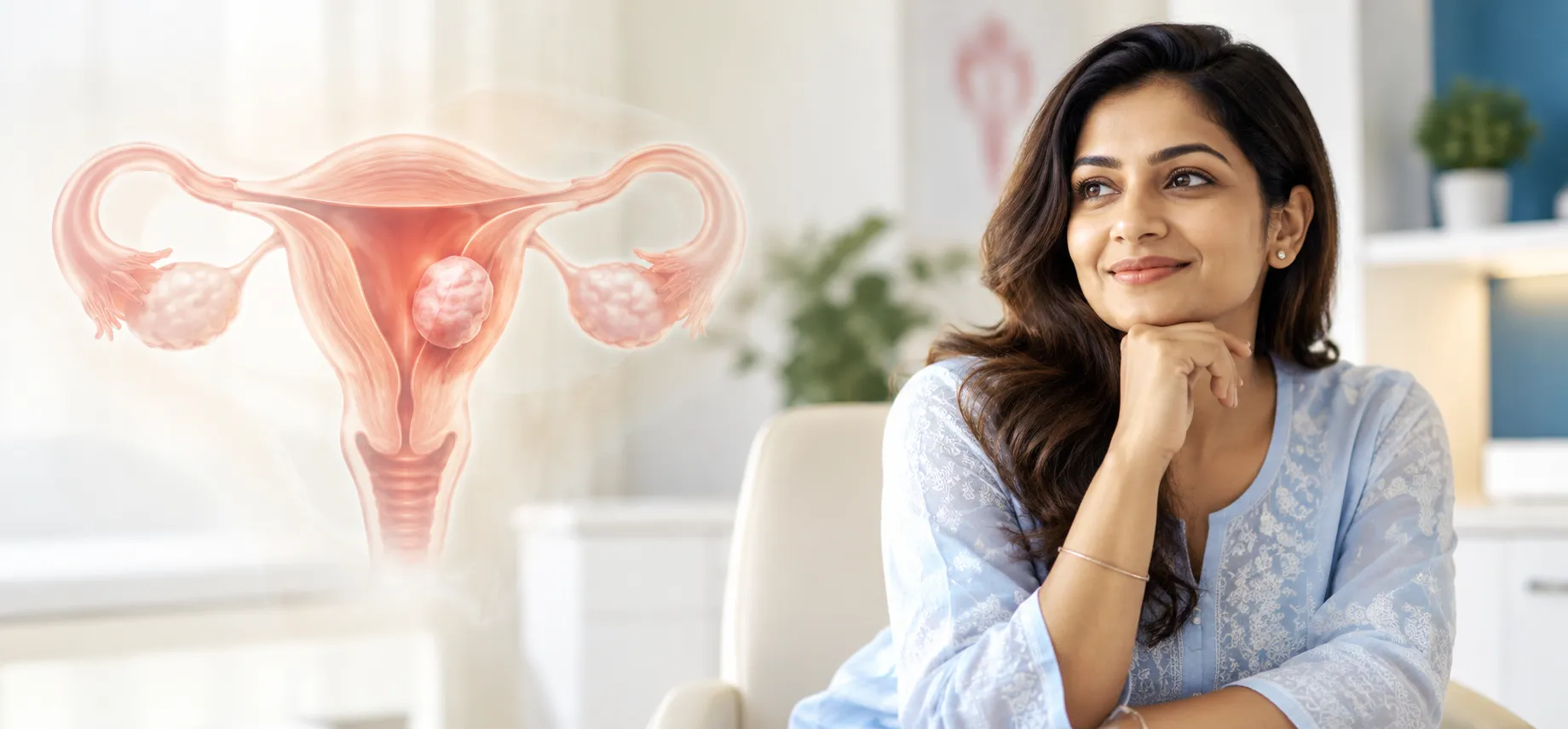
Uterine polyps are soft growths of the lining of the womb that can cause irregular bleeding and sometimes affect fertility. They are usually benign. This page explains the symptoms, causes, when to see a doctor and the homeopathic approach to uterine polyps at Welling Homeopathy.
Wondering which of these medicines is right for you?
Every person with uterine (endometrial) polyps is different, and so is the medicine that works best for them. To discover the best-suited homeopathic medicines for uterine (endometrial) polyps for you, consult our experts. They will study your symptoms, your past treatment history and your personality, and then find the homeopathy medicines that suit you best.
Call +91 8080 850 950 for a 1:1 personal consultation with our experts today.
Quick answers: homeopathy for uterine (endometrial) polyps
- What it is: Soft overgrowths of the uterine lining, usually benign.
- Typical sign: Irregular, heavy or between-period bleeding; bleeding after menopause.
- See a doctor if: You bleed after menopause or between periods, or struggle to conceive.
- Homeopathy: Individualised, supportive care alongside diagnosis and monitoring.
About uterine (endometrial) polyps
Endometrial polyps are finger-like or rounded growths attached to the inner wall of the uterus. They range from a few millimetres to a few centimetres and may be single or multiple. They are linked to hormonal factors, particularly oestrogen, and are more common after 40.
Many polyps cause no symptoms. When they do, the usual signs are irregular bleeding, heavy periods or spotting, and they can contribute to infertility or miscarriage. Diagnosis is by ultrasound and hysteroscopy, and removal (polypectomy) is often advised if they cause symptoms or for fertility, since polyps can rarely contain abnormal cells.
Common symptoms of uterine (endometrial) polyps
Symptoms vary from person to person. Common ones include:
- Irregular menstrual bleeding
- Heavy periods
- Spotting between periods or after intercourse
- Bleeding after menopause
- Difficulty conceiving or repeated miscarriage
- Often no symptoms
Causes and risk factors of uterine (endometrial) polyps
There is rarely a single cause. Factors that may contribute include:
- Hormonal factors, particularly raised oestrogen
- Age over 40 and perimenopause
- Obesity
- Tamoxifen use
- Hormone therapy
- Chronic endometrial inflammation
When to see a doctor
Get a proper medical assessment rather than waiting for the problem to settle on its own, and seek urgent care if you notice any of the following:
- Any bleeding after menopause
- Heavy or irregular bleeding
- Bleeding between periods
- Difficulty conceiving or recurrent miscarriage
- A polyp found on ultrasound
Homeopathic medicines for uterine (endometrial) polyps
The medicines below are commonly considered in homeopathy for uterine (endometrial) polyps, with the symptom picture traditionally associated with each. They are listed for general information, not as a prescription.
(1) Thuja occidentalis: traditionally considered for polypoid growths and mucous membrane tendencies.
(2) Calcarea carbonica: considered for polypi with profuse, early periods and fatigue.
(3) Phosphorus: considered for easy bleeding with weakness.
(4) Sanguinaria canadensis: traditionally considered for polypi with burning and bleeding.
(5) Sabina: considered for bleeding with clots and pain extending to the thighs.
Homeopathic treatment of uterine (endometrial) polyps at Welling Homeopathy
These are only basic indications – many more homeopathic medicines are used for uterine (endometrial) polyps, and the right one is chosen after detailed case-taking by an experienced doctor.
Homeopathy is offered as individualised, supportive care. Reliable scientific evidence that homeopathy treats uterine (endometrial) polyps is limited, so it should not replace a medical diagnosis or any treatment your doctor considers necessary, and you should not stop or change current medicines without medical advice.
Contact a Welling clinic or call +91 80 80 850 950 for a consultation in person or online.
Self-care and lifestyle tips
These measures support general health and may ease symptoms, but they do not replace treatment when it is needed.
- Track your bleeding pattern in a diary
- Keep a healthy weight
- Get recommended follow-up ultrasounds
- Do not ignore bleeding after menopause
- Discuss hormone medicines with your doctor
Frequently asked questions about uterine (endometrial) polyps
1. Are uterine polyps cancerous?
Most are benign. A small percentage, particularly after menopause, can contain abnormal cells, so removal and examination are often advised for symptomatic polyps.
2. How are uterine polyps diagnosed?
By transvaginal ultrasound, saline sonography or hysteroscopy, which also allows removal.
3. Do uterine polyps need to be removed?
Often, if they cause bleeding, affect fertility or are large or suspicious. Small asymptomatic polyps may be watched. Your gynaecologist will advise.
4. Can polyps come back?
Yes, they can recur, particularly if the hormonal cause persists.
5. Can homeopathy help with uterine polyps?
Homeopathy is offered as individualised, supportive care to help manage associated symptoms, alongside diagnosis and any removal advised by your gynaecologist. Bleeding after menopause needs prompt assessment.
6. Can I take homeopathic medicines along with my current medicines for uterine (endometrial) polyps?
Homeopathic medicines are highly diluted and are not known to interfere with other medicines, but please tell your doctor and our specialists about everything you take. Do not stop, skip or change any prescribed medicine on your own; any change should be discussed with the doctor who prescribed it.
7. Who is the best homeopathy doctor for uterine (endometrial) polyps in Mumbai?
Dr. Sourabh Welling, M.D., founder of Welling Homeopathy, who has over 25 years of experience, treats uterine (endometrial) polyps with individualised homeopathic care, together with a team of senior specialists. You can consult him and the team at our Mumbai clinics or online from anywhere in India and abroad.
Related Reading
- Homeopathy Treatment of Fibroids
- Treatment For Adenomyosis
- How To Increase Endometrial Thickness Naturally?
- Homeopathy Treatment for Asherman Syndrome: Getting Pregnant with Intrauterine Adhesions
- Homeopathy Treatment for Menopause and Hot Flushes
- Homeopathy Treatment for Premenstrual Syndrome (PMS)
- Homeopathy Treatment for Irregular Periods
- Homeopathy Treatment for Heavy Periods (Menorrhagia)
- Homeopathy Treatment for Ovarian Cysts
- Homeopathy Treatment for Bacterial Vaginosis
- Homeopathy Treatment for Painful Intercourse (Dyspareunia)
- Homeopathy Treatment for Fibrocystic Breast Changes
- Homeopathy Treatment for Breast Pain (Mastalgia)
- Homeopathy Treatment for Mastitis (Breast Infection)
- Homeopathy Treatment for Pelvic Inflammatory Disease (PID)
- Homeopathy Treatment for Premature Ovarian Insufficiency (Early Menopause)
- Homeopathy Treatment for Hirsutism (Excess Facial and Body Hair)
To consult Welling Homeopathy experts, call +91 80 80 850 950.
Disclaimer: this page is for information only and is not a substitute for professional medical advice, diagnosis or treatment. Results vary from person to person.
