Varicose veins can cause more than a cosmetic concern. They may cause aching, heaviness, swelling, itching and discomfort in the legs, particularly after standing or sitting for long periods.
If you are looking for homeopathy treatment for varicose veins, you may also be wondering whether you really need surgery or a procedure, whether the condition can be managed naturally, and what you should do if your varicose veins are getting worse.
At Welling Homeopathy, our approach is to first understand your symptoms, medical history, lifestyle and the nature of your varicose veins before suggesting an individualised treatment plan.
With more than 24 years of experience in homeopathic practice, our experts have worked with patients with a wide range of varicose veins.
At the same time, varicose veins should not simply be treated as a cosmetic problem. Some people need assessment by a vascular specialist, particularly when there is significant pain, swelling, skin damage, bleeding or an ulcer.
This page explains what varicose veins are, why they develop, what symptoms to watch for, how they are medically assessed, the treatment options available, and where homeopathy may fit into an individualised approach.
What Are Varicose Veins?
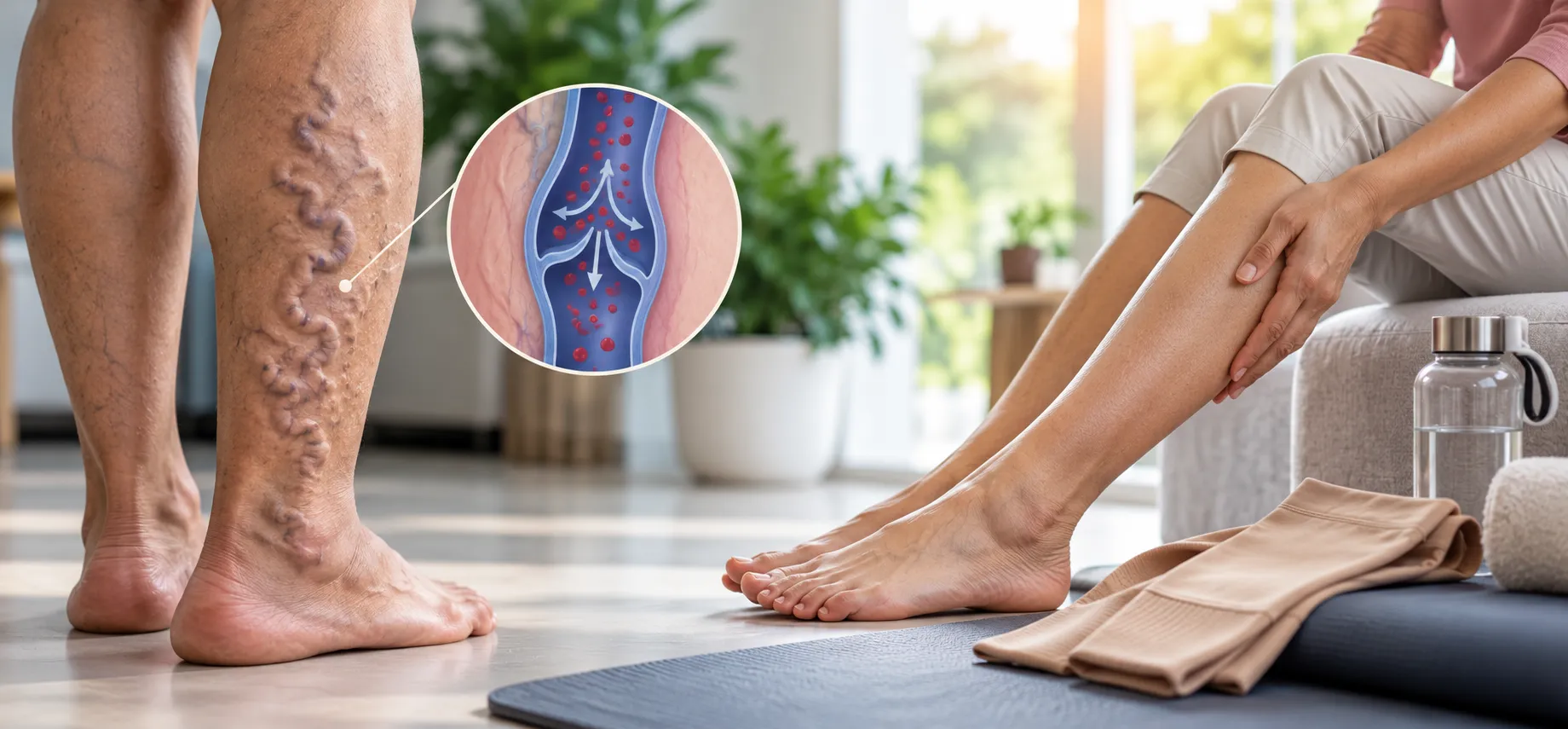
Varicose veins are enlarged and twisted veins that are most commonly seen in the legs.
They may appear as raised, blue, purple or greenish veins underneath the skin. Some are relatively small, while others can become quite prominent and rope-like.
The veins in your legs have small valves that help blood travel upwards towards the heart.
When these valves do not work properly, some blood can flow backwards and collect in the veins. The increased pressure can cause the veins to enlarge and become twisted.
This is known as chronic venous disease or venous insufficiency, depending on the extent of the problem.
Varicose veins are common and are not always dangerous. Some people have visible varicose veins without significant symptoms.
However, others experience pain, heaviness, swelling, itching or skin changes. In more advanced cases, complications such as bleeding, inflammation, blood clots or venous ulcers can occur.
What Do Varicose Veins Look Like?
Varicose veins can look different from one person to another.
Common appearances include:
- Raised, twisted veins on the legs
- Blue, purple or greenish veins
- Rope-like veins under the skin
- Bulging veins around the calf or thigh
- Clusters of enlarged veins around the ankle or lower leg
They are different from spider veins, which are usually much smaller red, blue or purple veins close to the surface of the skin.
If you are unsure whether what you are seeing is a varicose vein, it is better to have it assessed rather than assuming.
Symptoms of Varicose Veins
Some people have no symptoms apart from the visible veins.
Others may experience:
1. Aching or pain in the legs
The legs may feel uncomfortable, especially towards the end of the day.
2. Heavy or tired legs
Some people describe their legs as feeling unusually heavy after standing or walking for long periods.
3. Swelling
Swelling can occur around the ankles, feet or lower legs.
4. Itching
The skin around the affected veins may become itchy.
5. Burning or throbbing
Some people experience burning, throbbing or a feeling of pressure around the veins.
6. Muscle cramps
Leg cramps, particularly at night, may occur in some people.
7. Skin changes
Long-standing venous problems can cause changes in the skin around the ankles and lower legs. The skin may become darker, dry, itchy, inflamed or harder.
8. Ulcers
In more advanced venous disease, ulcers may develop around the lower leg or ankle and may take a long time to heal.
Symptoms may become worse after prolonged standing and may improve when you rest or raise your legs.
What Causes Varicose Veins?
There is usually not one single cause.
Varicose veins develop when the veins and their valves are unable to return blood efficiently towards the heart.
Several factors can increase the likelihood of developing varicose veins.
Age
The risk increases with age because veins and their valves can become less effective over time.
Family history
Varicose veins can run in families. If close family members have them, your own risk may be higher.
Pregnancy
Pregnancy increases the pressure on the veins in the legs and hormonal changes can also affect the veins.
Varicose veins that develop during pregnancy may improve after delivery.
Being overweight
Extra body weight can increase pressure on the veins and may contribute to venous symptoms.
Prolonged standing
People whose work involves standing for many hours may be more likely to develop symptoms.
Prolonged sitting
Long periods of sitting with limited movement can also contribute to poor venous circulation.
Previous deep vein thrombosis
A previous DVT can damage the valves in the veins and increase the risk of chronic venous problems.
Are Varicose Veins Dangerous?
Most varicose veins are not immediately dangerous.
But that does not mean every case should simply be ignored.
Some people develop complications, including:
- Bleeding from a varicose vein
- Inflammation of a superficial vein
- Blood clots
- Skin changes
- Varicose eczema
- Venous leg ulcers
- In rare cases, deeper vein thrombosis
If you have a wound or ulcer that is not healing, significant swelling, sudden worsening pain, bleeding or a vein that becomes hot, red and very tender, you should seek medical evaluation.
A bleeding varicose vein requires prompt medical attention.
When Should You See a Doctor for Varicose Veins?
You should consider a medical evaluation if your varicose veins are:
- Painful
- Increasing in size or number
- Associated with swelling
- Causing significant itching
- Associated with skin colour changes
- Associated with a sore or ulcer
- Bleeding
- Becoming hot, red or particularly painful
You should seek urgent medical help for significant bleeding or symptoms that could indicate a blood clot.
A doctor may recommend further assessment depending on your symptoms.
When intervention is being considered, duplex ultrasound is commonly used to examine blood flow and identify abnormal veins and valve problems.
How Are Varicose Veins Diagnosed?
Diagnosis often begins with your medical history and a physical examination.
Your doctor may ask:
- When did the veins first appear?
- Are they becoming larger?
- Do you have pain or heaviness?
- Does swelling occur?
- Is it worse at the end of the day?
- Have you had a blood clot before?
- Have you been pregnant?
- Does anyone in your family have varicose veins?
- Do you spend long hours standing or sitting?
- Have you previously had treatment?
If a vascular assessment is required, a duplex ultrasound can help identify abnormal blood flow and determine which veins are affected.
This information is particularly important before deciding whether an invasive treatment is appropriate.
What Are the Treatment Options for Varicose Veins?
Treatment depends on the severity of the condition, your symptoms, the veins involved and your overall health.
Not every person with varicose veins needs a procedure.
Some people have no symptoms and can simply monitor the condition.
For people with troublesome symptoms or complications, treatment may include lifestyle measures, compression or procedures.
Lifestyle Measures
Regular movement is helpful.
Walking and other appropriate forms of exercise can help the calf muscles assist the return of blood from the legs.
If you spend long periods sitting or standing, changing position and moving regularly can be useful.
Raising your legs when resting may also help reduce swelling.
Maintaining a healthy weight can also reduce pressure on the legs.
Compression Stockings
Compression stockings apply graduated pressure to the legs and can help reduce symptoms such as swelling and discomfort in appropriate patients.
However, compression is not suitable for everyone.
People with certain problems affecting arterial blood flow may need assessment before using compression.
It is therefore better to ask a doctor or qualified healthcare professional about the appropriate type and pressure rather than buying strong compression stockings without assessment.
Endovenous Ablation
For suitable patients with symptomatic venous disease, procedures such as endothermal ablation may be used to close the problematic vein.
Radiofrequency or laser energy can be used to heat and close the affected vein.
Modern vascular guidelines recognise endovenous procedures as important treatment options for appropriate patients.
Foam Sclerotherapy
Sclerotherapy involves injecting a solution, sometimes in foam form, into an affected vein.
The treatment causes the vein to close, after which blood is redirected through healthier veins.
Surgery
Traditional procedures such as ligation and stripping are still used in selected situations, although less invasive treatments are available for many patients.
The appropriate treatment depends on the individual vascular findings.
Can Varicose Veins Be Treated Without Surgery?
This is one of the most common questions people ask.
The answer depends on what you mean by “treated”.
If the main problem is discomfort, swelling or heaviness, conservative measures may help manage symptoms.
However, lifestyle changes do not physically remove an established varicose vein.
Similarly, compression stockings can help with symptoms but do not permanently eliminate the underlying abnormal vein.
When there is significant venous reflux or complications, a vascular specialist may recommend a procedure.
So it is important to distinguish between:
Managing symptoms
and
Closing or removing an abnormal vein.
They are not the same thing.
Homeopathy Treatment for Varicose Veins
Many people searching for varicose vein treatment specifically want to know:
“Can homeopathy help varicose veins?”
This is a reasonable question.
At Welling Homeopathy, we take a personalised approach to chronic conditions. Rather than selecting a medicine simply because someone has been diagnosed with “varicose veins”, our experts take a detailed history of the person’s symptoms and overall health.
We look at factors such as:
- When the varicose veins started
- Which areas are affected
- Pain and heaviness
- Swelling
- Itching
- Skin changes
- Whether symptoms are worse after standing
- Whether symptoms improve after raising the legs
- Previous treatments
- Pregnancy and reproductive history where relevant
- Family history
- General health and lifestyle
The objective is to understand the person rather than treating a label alone.
Why Choose Welling Homeopathy for Varicose Veins?
At Welling Homeopathy, we have been practising for more than 24 years.
Our approach is based on detailed case-taking and individualisation.
Two people may both have visible varicose veins but have very different symptoms, medical histories and overall health.
That is why our experts do not believe in giving everyone the same medicine.
During a consultation, we try to understand the complete picture.
Individualised consultation
Your treatment plan is based on your individual symptoms and history rather than only the diagnosis.
Experienced homeopathy doctors
Our team includes homeopathy doctors with experience in managing chronic health conditions.
Online consultations
You do not necessarily need to travel to Mumbai to speak with our experts.
Online consultations are available for patients in India and internationally.
Responsible treatment
We believe patients should understand what their condition is, what treatment options are available and when specialist medical care is required.
What Can You Do at Home for Varicose Veins?
There are several simple measures that may help with symptoms.
Keep moving
Regular walking and appropriate physical activity can help the muscles of the legs support venous return.
Avoid staying in one position for too long
If your work requires long periods of sitting or standing, take regular movement breaks when possible.
Raise your legs when resting
Leg elevation can help reduce swelling for some people.
Maintain a healthy weight
If you are overweight, gradual weight management can reduce some of the pressure placed on the veins.
Look after your skin
Dry or irritated skin around varicose veins can become vulnerable to injury.
Moisturising can help maintain the skin barrier.
Avoid injuring prominent veins
A superficial varicose vein can bleed if injured, so take care when shaving or doing activities where the legs may be injured.
Varicose Veins During Pregnancy
Varicose veins are relatively common during pregnancy.
The growing uterus increases pressure on the veins, while hormonal changes can also affect the veins.
If varicose veins develop during pregnancy, treatment decisions need to take the pregnancy into account.
Compression stockings may sometimes be used for symptom relief, but invasive procedures are generally not performed during pregnancy unless there is a specific medical reason.
Many pregnancy-related varicose veins improve after delivery.
If you are pregnant and develop sudden leg swelling, significant pain or other concerning symptoms, seek medical advice rather than assuming it is simply a varicose vein.
Can Varicose Veins Come Back?
Yes.
Even after successful treatment of particular abnormal veins, new varicose veins can develop.
This is because treatment addresses the veins that are causing the problem at that time. It does not necessarily eliminate every future risk factor for venous disease.
Your age, family history, pregnancy, weight, previous vein problems and other factors can continue to influence your risk.
This is another reason why long-term attention to general health and appropriate medical follow-up can be important.
Homeopathy for Varicose Veins: Frequently Asked Questions
What is the best homeopathy medicine for varicose veins?
There is no single homeopathic medicine that is appropriate for everyone with varicose veins.
In homeopathic practice, medicines are selected based on the individual’s symptoms and overall case.
However, no homeopathic medicine should be presented as a proven method for removing established varicose veins or replacing indicated vascular treatment.
Can homeopathy cure varicose veins permanently?
There is currently insufficient high-quality evidence to claim that homeopathy can permanently cure established varicose veins or repair damaged venous valves.
If you have significant symptoms or complications, appropriate medical evaluation should not be delayed.
Can varicose veins disappear naturally?
Some mild or pregnancy-related venous changes may improve, but established varicose veins do not necessarily disappear on their own.
The course varies from person to person.
Can exercise help varicose veins?
Regular movement, particularly walking, can help support circulation and may improve symptoms.
However, exercise does not physically remove an established varicose vein.
Are compression stockings useful for varicose veins?
They can help reduce symptoms such as swelling and discomfort in suitable patients.
However, they are not appropriate for everyone. A healthcare professional can advise whether compression is suitable and which type is appropriate.
Do varicose veins always require surgery?
No.
Many people with varicose veins do not require a procedure.
When treatment is needed, several options exist, including endovenous procedures, sclerotherapy and surgery, depending on the individual situation.
When should I see a vascular specialist?
Consider specialist assessment if you have significant pain, swelling, skin changes, ulcers, bleeding or worsening varicose veins.
A vascular specialist can assess whether a procedure is appropriate.
Our Approach to Varicose Veins
At Welling Homeopathy, we understand why many patients prefer to explore a non-invasive approach before considering a procedure.
We also believe that patients deserve honest information.
Varicose veins are a medical condition involving the veins and their valves. They should not be reduced to a simple problem of “poor circulation”.
Our experts therefore begin by understanding your individual case.
We review your symptoms, history, previous investigations and treatments and then decide whether homeopathic treatment is appropriate for you.
If we believe that you require further vascular assessment, we will advise you accordingly.
The goal is not to promise a cure. The goal is to understand your condition and help you make an informed decision about your care.
Should You Consider Homeopathy for Varicose Veins?
If your varicose veins are mild and you are mainly looking for help with symptoms, you may wish to discuss conservative options with a healthcare professional.
If your symptoms are significant, your veins are rapidly changing, or you have skin changes, ulcers or bleeding, medical evaluation is more important.
If you have already undergone conventional treatment and are looking for additional support, you can also discuss your situation with our experts.
Every case is different.
What is appropriate for one person may not be appropriate for another.
Meet Our Varicose Veins Treatment Experts
Living with painful or uncomfortable varicose veins can affect your daily life.
You do not have to decide on your treatment based only on what you read online.
At Welling Homeopathy, our experts take time to understand your symptoms, medical history and previous treatment before advising you about the next step.
With more than 24 years of experience in homeopathy, we have developed a detailed, individualised approach to chronic health conditions.
If you would like to know whether our approach may be appropriate for your varicose veins, speak with our experts.
Call or WhatsApp: +91 80 80 850 950
Meet our experts and understand your Homeopathy treatment For Varicose Veins.