
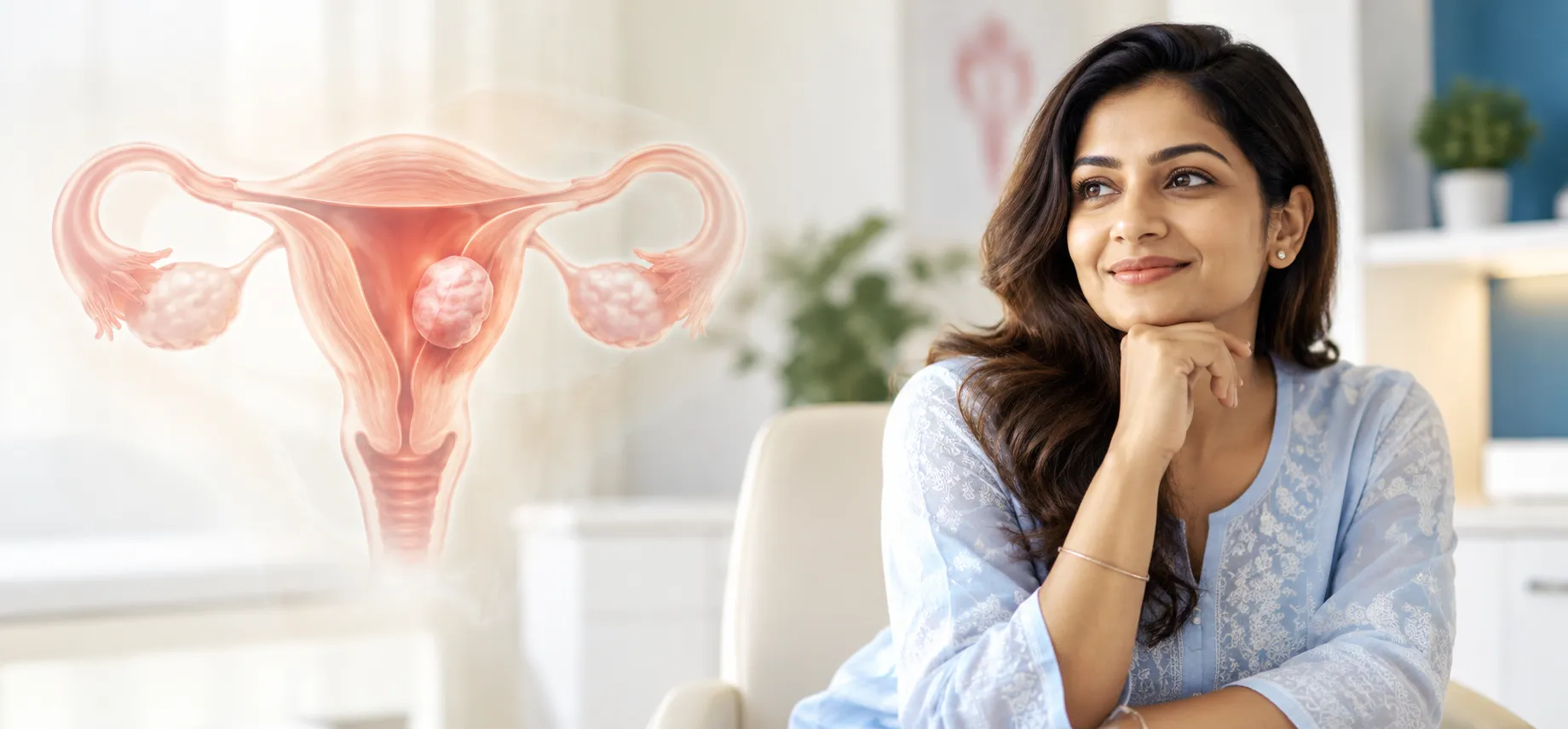
Heavy periods that last for days, a heaviness in the lower abdomen, frequent urination and tiredness from anaemia are the signs that bring many women to ask about fibroids. Fibroids are very common non-cancerous growths of the uterus, and many cause no problems at all. This guide explains the symptoms, causes and warning signs of uterine fibroids, what helps, and the homeopathic medicines traditionally considered, along with how our specialists approach each person.
Wondering which of these medicines is right for you?
Every person with uterine fibroids is different, and so is the medicine that works best for them. To discover the best-suited homeopathic medicines for uterine fibroids for you, consult our experts. They will study your symptoms, your past treatment history and your personality, and then find the homeopathy medicines that suit you best.
Call +91 8080 850 950 for a 1:1 personal consultation with our experts today.
Uterine Fibroids: quick answers
- What are they? Non-cancerous growths of muscle and fibrous tissue in or on the wall of the uterus, also called myomas or leiomyomas.
- Main symptoms: Heavy or prolonged periods, pelvic pressure, frequent urination, constipation and anaemia.
- Common causes: Hormones (oestrogen and progesterone), family history, age 30 to 50 and excess weight.
- Urgent signs: Very heavy bleeding with dizziness, sudden severe pelvic pain, or bleeding after menopause.
- Our approach: Meet our specialists for your personal best homeopathic remedy and a plan that supports your recovery.
About uterine fibroids
Fibroids vary from tiny seedlings to large masses. They are named by position: within the wall (intramural), on the outside (subserosal) or bulging into the uterine cavity (submucosal). A submucosal fibroid, even a small one, can cause heavy bleeding and affect fertility, while a large outer one may press on the bladder or bowel.
Many fibroids do not need treatment and shrink after menopause. Treatment is considered when they cause heavy bleeding, pain, pressure symptoms or problems with conceiving, and your gynaecologist can explain the medical and surgical options.
Common symptoms of uterine fibroids
Symptoms vary from person to person. Common ones include:
- Heavy or prolonged periods, sometimes with clots
- Pelvic pressure, heaviness or a swollen lower abdomen
- Frequent need to pass urine
- Constipation and a feeling of fullness
- Pain or discomfort in the lower back or pelvis
- Pain during intercourse
- Tiredness, breathlessness and pallor from anaemia
- Difficulty in conceiving or repeated miscarriage in some women
Causes and risk factors of uterine fibroids
There is rarely a single cause. Factors that may contribute include:
- The hormones oestrogen and progesterone, which stimulate fibroid growth
- A family history of fibroids
- Age between about 30 and 50
- Excess weight
- Starting periods at an early age
- Not having had children
- Low vitamin D levels
- Long-term stress and a diet high in red meat and low in vegetables
Warning signs and when to get urgent help
Please go to the nearest hospital emergency department immediately if there is:
- Very heavy bleeding that soaks through a pad every hour, or bleeding with dizziness or fainting
- Sudden, severe pelvic pain, especially with fever or vomiting
- Being unable to pass urine
- Bleeding after menopause, or bleeding between periods that persists
- A rapidly enlarging abdomen, or severe tiredness and breathlessness from anaemia
Homeopathic medicines for uterine fibroids
The medicines below are commonly considered in homeopathy for uterine fibroids, with the symptom picture traditionally associated with each. They are listed for general information, not as a prescription.
(1) Calcarea carbonica: Heavy, early periods with tiredness, chilliness, a tendency to gain weight and sweating of the head, in a person who is easily exhausted.
(2) Sepia: A bearing-down, dragging feeling in the pelvis with irregular periods, tiredness and irritability.
(3) Thuja occidentalis: A tendency to growths with scanty or irregular periods and sensitivity to damp weather.
(4) Aurum muriaticum natronatum: Traditionally considered for hard, enlarged uterus with a tendency to growths and low spirits.
(5) Phosphorus: Profuse bright-red bleeding between periods with weakness and a craving for cold drinks.
(6) Trillium pendulum: Profuse bright-red bleeding with a feeling that the hips and back are falling to pieces, relieved by binding tightly.
(7) Sabina: Bright-red bleeding with clots and pains that shoot from the back to the pubic bone.
(8) Ustilago maydis: Dark clotted bleeding that is worse on slight movement, with a soft and congested uterus.
(9) Pulsatilla: Delayed, scanty or changeable periods in mild and weepy women who dislike heat.
(10) Millefolium: Bright-red, free bleeding without much pain, for example from strain or lifting.
Homeopathic treatment of uterine fibroids at Welling Homeopathy
These are only basic indications – many more homeopathic medicines are used for uterine fibroids, and the right one is chosen after detailed case-taking by an experienced doctor.
Homeopathy is offered here as individualised, supportive care alongside your current treatment. Reliable scientific evidence that homeopathy treats uterine fibroids is limited, so it should not replace a medical diagnosis or any treatment your doctor considers necessary. Please do not stop, skip or change any prescribed medicine on your own; any change should be discussed with the doctor who prescribed it and with our specialists.
Meet our specialists to find your personal best homeopathic remedy and a care plan that supports your recovery. Please do not delay: the earlier you begin, the better. Read about our homeopathic care for uterine fibroids, contact a Welling clinic or call +91 80 80 850 950 for a consultation in person or online.
Self-care and lifestyle tips
These measures support general health and may ease symptoms, but they do not replace treatment when it is needed.
- Eat iron-rich food such as green leafy vegetables, beetroot, dates, jaggery, pulses and nuts, with vitamin C to help absorption.
- Ask your doctor to check your haemoglobin and iron levels, and to advise supplements if needed.
- Keep a healthy weight and exercise regularly.
- Maintain adequate vitamin D through safe sun exposure and diet, as your doctor advises.
- Keep a period diary to track the amount and length of bleeding.
- Attend ultrasound follow-ups as advised to watch the size of the fibroids.
Frequently asked questions about uterine fibroids
1. What is the best homeopathic medicine for fibroids?
There is no single best medicine. Calcarea carbonica, Sepia, Thuja and Phosphorus are among those traditionally considered, but the right one depends on your symptoms, bleeding pattern and general health. Please consult our specialists rather than self-prescribing.
2. Can homeopathy dissolve fibroids?
Homeopathy is offered as supportive care to ease symptoms. Results vary and reliable evidence that it shrinks fibroids is limited, so we do not make that claim.
3. Are uterine fibroids cancerous?
Almost always not. Fibroids are benign, and cancer in a fibroid is very rare, but rapid growth or bleeding after menopause should be assessed promptly.
4. Do fibroids affect pregnancy?
Some fibroids, especially those that bulge into the uterine cavity, can make it harder to conceive or increase the chance of miscarriage, while many women with fibroids have a normal pregnancy.
5. Do all fibroids need surgery?
No. Fibroids that cause no problems may only need monitoring. Treatment is considered for heavy bleeding, pain, pressure or fertility problems, and your gynaecologist can discuss options.
6. Will fibroids shrink after menopause?
They usually shrink after menopause as hormone levels fall, but they can still cause symptoms until then.
7. How do I book a consultation?
Call +91 80 80 850 950 to book a 1:1 consultation at a Welling clinic or online. Please bring your ultrasound reports.
Related Reading
- Homeopathy Treatment of Fibroids
- Treatment of Uterine Fibroids
- 7 Warning Signs That You Have Fibroids
More guides on women’s health
- 10 Best Homeopathic Medicines for Treatment of PCOS (Polycystic Ovary Syndrome)
- 10 Best Homeopathic Medicines for Treatment of Endometriosis
- 10 Best Homeopathic Medicines for Menopause Symptoms
To consult Welling Homeopathy experts, call +91 80 80 850 950.
Disclaimer: this page is for information only and is not a substitute for professional medical advice, diagnosis or treatment. Results vary from person to person.
