
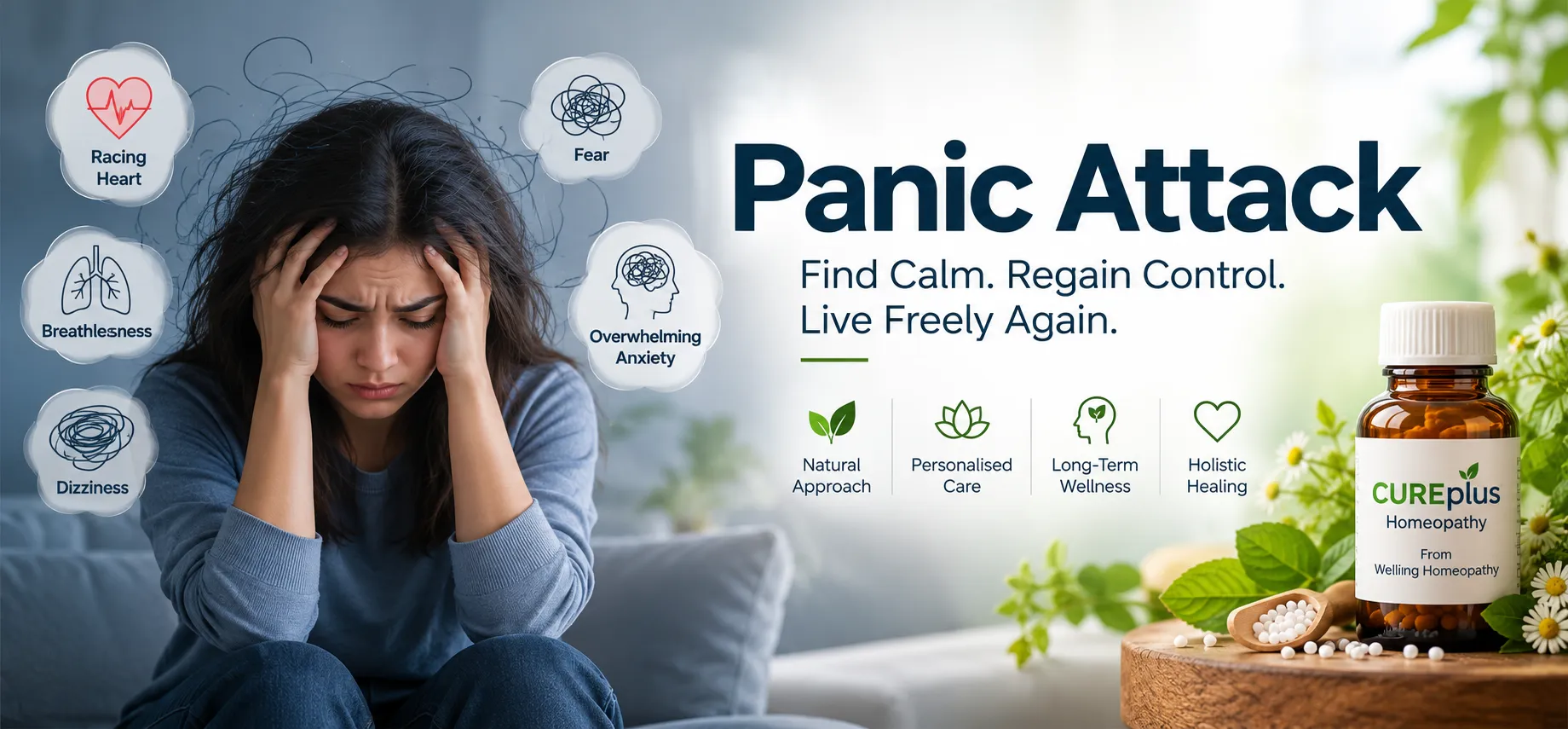
Have you ever experienced a sudden racing heartbeat, difficulty breathing, sweating, dizziness, or an overwhelming fear that something terrible is about to happen? Perhaps you were sitting comfortably at home, travelling in a car, or preparing for an important meeting when, without warning, your body seemed to go into emergency mode. You may have felt as though you were having a heart attack or losing control of yourself. If this sounds familiar, you may have experienced a panic attack. Panic attacks can be frightening, especially when they happen repeatedly and you cannot understand why they occur. Many people start avoiding crowded places, travelling alone, attending meetings, or even going outside because they are afraid another attack will happen.
Get Cured
The good news is that panic attacks are treatable, and the right assessment and treatment can help you regain confidence in your daily life. At Welling Homeopathy Clinics, our experts offer CUREplus Homeopathy as an approach for people seeking individualised care for panic attacks and related concerns.
Call +91 8080 850 950 for a 1:1 personal consultation with Dr.Welling or his team of experts.
In this article, we will explain the symptoms of a panic attack, why it happens, how to manage an episode, and what you should know about treatment options for longer-term relief.
Panic attack: quick answers
- What is it? A sudden surge of intense fear with physical symptoms such as a racing heart, breathlessness, sweating, trembling and dizziness.
- How long does it last? It usually peaks within minutes and settles in about 5 to 20 minutes, though you may feel drained afterwards.
- How to stop one: Breathe slowly and gently, ground yourself by naming what you can see, feel and hear, relax your shoulders and jaw, and let the wave pass.
- Get urgent help if: you have new or severe chest pain, severe breathlessness or fainting. Do not assume these are panic.
- Best-evidenced treatment: cognitive behavioural therapy (CBT) and, when appropriate, medication prescribed by a qualified clinician.
What Is a Panic Attack?
A panic attack is a sudden episode of intense fear or discomfort accompanied by physical and emotional symptoms. It can happen when you face a stressful situation, but it can also occur without any obvious trigger. During an attack, your body’s natural alarm response becomes activated. Your heart may beat faster, your breathing may change, and you may feel that you are in danger even when there is no immediate threat. These sensations can be extremely distressing. However, experiencing a panic attack does not automatically mean that you have panic disorder. A healthcare professional can help determine whether your symptoms are related to panic, another anxiety condition, or a physical health problem.
What Are the Symptoms of a Panic Attack?
Panic attack symptoms can affect your body, thoughts, and behaviour. Some people experience mostly physical symptoms, while others experience intense fear or a feeling of losing control. Common panic attack symptoms include:
- Sudden racing or pounding heartbeat
- Shortness of breath or a feeling of suffocation
- Chest discomfort or tightness
- Sweating, trembling, or shaking
- Dizziness, light-headedness, or weakness
- Tingling or numbness in the hands, feet, or face
- Nausea or stomach discomfort
- Hot flushes or chills
- A feeling of unreality or being disconnected from your surroundings
- Fear of dying, fainting, or losing control
- A strong feeling that something terrible is about to happen
Not everyone experiences all these symptoms. The intensity can vary from one episode to another. Important: Chest pain, severe breathlessness, fainting, or new and unexplained symptoms should not automatically be attributed to anxiety. Seek urgent medical assessment when symptoms are severe, new, or potentially life-threatening.
How Long Does a Panic Attack Last?
Many panic attacks reach their peak within minutes and settle over approximately 5 to 20 minutes, although symptoms can sometimes continue longer. You may feel exhausted, shaky, or anxious even after the most intense sensations have passed. If you experience repeated waves of panic, it can feel as though the episode is lasting much longer. The duration and frequency of attacks differ from person to person. If attacks are recurring, interfering with your sleep, or making you afraid to leave home, arrange an assessment rather than waiting for the problem to disappear on its own.
What Causes Panic Attacks?
There is no single explanation for every panic attack. Several factors may contribute to the body’s alarm response.
1. Prolonged Stress
Work pressure, financial difficulties, family responsibilities, relationship problems, and major life changes can increase stress. In some people, intense or prolonged stress may contribute to episodes of panic.
2. Anxiety and Fear of Another Attack
After experiencing a frightening episode, you may start monitoring your heartbeat, breathing, or other bodily sensations. A small change can then trigger the fear that another attack is beginning. This can create a cycle in which fear increases physical sensations and those sensations increase fear.
3. Difficult Life Experiences
Bereavement, traumatic experiences, major disappointments, and other distressing events may contribute to anxiety or panic symptoms.
4. Family History and Individual Susceptibility
A family history of panic disorder or anxiety may be relevant. However, it does not mean that a person will necessarily develop the condition.
5. Caffeine, Nicotine, Alcohol, and Other Substances
Excessive caffeine and some other substances can trigger or worsen symptoms in susceptible individuals. Alcohol use, withdrawal from alcohol, and certain recreational or prescription substances can also contribute.
6. Physical Health Conditions
Some physical conditions can produce symptoms that resemble panic attacks. Thyroid disorders, abnormal heart rhythms, respiratory problems, and other medical conditions may need to be considered. A proper assessment helps avoid overlooking a physical cause.
What Is the Difference Between a Panic Attack and Panic Disorder?
A panic attack describes an episode. Panic disorder is a condition in which a person experiences recurrent, unexpected panic attacks and then develops persistent worry about further attacks or changes their behaviour because of that fear.
For example, someone may experience a single panic attack during a period of intense stress and never experience another one. Another person may experience repeated attacks, constantly worry about their heartbeat, avoid travelling alone, or stop attending social events. The second pattern may indicate panic disorder and deserves professional assessment.
A healthcare professional will consider the frequency of episodes, how long the problem has been present, the impact on daily life, and whether another condition could explain the symptoms.
Panic Attack vs Anxiety Attack: What Is the Difference?
People often use the terms panic attack and anxiety attack as if they mean the same thing. Panic attack is a recognised clinical term, while anxiety attack is a popular phrase rather than a formal diagnosis. In general, a panic attack arrives abruptly and reaches its peak within minutes, whereas anxiety tends to build up gradually around a worry or a stressful situation.
| Panic attack | Anxiety (often called an anxiety attack) | |
|---|---|---|
| Onset | Sudden, often within minutes | Usually builds up gradually |
| Trigger | May have no obvious trigger | Usually linked to a worry or stressful situation |
| Intensity | Overwhelming, peaks quickly | Can range from mild to severe |
| Duration | Usually settles in about 5 to 20 minutes | Can last for hours or days |
| Typical feelings | Racing heart, breathlessness, fear of dying or losing control | Worry, restlessness, tension, difficulty concentrating |
The two can occur in the same person, and the boundary is not always clear. If you are unsure which one you are experiencing, a healthcare professional can help you understand your symptoms and plan the right care.
Why Do Panic Attacks Happen Without Any Reason?
Many people ask, “Why am I having panic attacks when nothing bad is happening?”
This is a common and understandable concern. Panic attacks can occur without an obvious external trigger. The body’s alarm response may activate unexpectedly, and physical sensations such as a faster heartbeat or altered breathing may be interpreted as signs of danger. Sometimes, a person recognises a trigger only after observing their symptoms over time. In other cases, there may be no clear trigger.
Not knowing why an attack happened does not mean that you are weak or that you are imagining your symptoms. The sensations are real. The important step is to assess the symptoms and learn how to respond to them safely.
How to Stop a Panic Attack Quickly
If you feel a panic attack beginning, the following steps may help you manage the episode.
1. Remind Yourself That the Feeling Can Pass
If you have already been medically assessed and recognise the symptoms as your usual panic episodes, remind yourself that the sensations can settle. Try not to interpret every heartbeat or change in breathing as proof that something terrible is happening.
2. Slow Down Your Breathing
Breathe gently and comfortably. Try breathing in slowly through your nose and breathing out slowly without forcing a deep breath. Avoid repeated, forceful deep breaths, as over-breathing can worsen dizziness and tingling. Do not breathe into a paper bag.
3. Focus on Your Immediate Surroundings
Name five things you can see, four things you can feel, and three things you can hear. This grounding exercise can help bring your attention back to the present moment.
4. Relax Your Muscles
If possible, sit somewhere safe and relax your shoulders, hands, and jaw. Avoid repeatedly checking your pulse or searching the internet for symptoms while the episode is happening.
5. Seek Help if Symptoms Are New or Severe
Do not assume that a first episode is a panic attack. Chest pain, severe breathing difficulty, collapse, or unusual symptoms require urgent medical evaluation.
How to Help Someone Who Is Having a Panic Attack
If a family member, friend or colleague is having a panic attack, you can help by staying calm and steady.
- Stay with them and speak slowly in a calm, reassuring voice.
- Ask how you can help rather than assuming. Avoid saying calm down or there is nothing to worry about.
- Move them to a quieter, less crowded place if possible.
- Encourage slow, comfortable breathing and offer to breathe along with them.
- Stay until the symptoms settle, then let them rest and drink some water.
- Call 112 or take them for emergency care if there is chest pain, severe breathlessness, fainting, confusion, or if the symptoms are new or do not settle.
How to Prevent Panic Attacks Naturally
People searching for natural ways to prevent panic attacks often want practical steps they can follow every day. Healthy habits can support general well-being and may help reduce some triggers, although they are not a substitute for appropriate treatment when panic attacks are frequent or severe.
Maintain a Regular Sleep Schedule
Poor sleep can increase stress and make it more difficult to cope with anxiety. Try to maintain consistent sleeping and waking times.
Reduce Excessive Caffeine
If coffee, energy drinks, or strong tea make your heart race or leave you feeling restless, consider reducing your intake gradually and observing whether your symptoms improve.
Exercise Regularly
Walking, swimming, cycling, and other suitable forms of physical activity can support physical and mental well-being. Begin at a comfortable level.
Eat Regular Meals
Long gaps between meals may leave some people feeling shaky or uncomfortable. Regular meals and adequate hydration can support general health.
Learn Relaxation Techniques
Gentle breathing exercises, mindfulness, and relaxation practices may help you respond to stress. Practise them regularly rather than only during an attack.
Avoid Alcohol or Other Substances as a Coping Strategy
Using alcohol or non-prescribed substances to suppress anxiety can create additional problems. If you regularly use alcohol or sedatives, seek medical advice before stopping suddenly because withdrawal can be dangerous.
Can Panic Attacks Be Cured Permanently?
This is one of the most common questions people ask when seeking panic attack treatment.
Many people experience substantial improvement with appropriate care. Panic attacks may become less frequent, less intense, or stop occurring for long periods. Others may need continued support to manage symptoms and prevent a return of difficulties.
However, no responsible healthcare professional can guarantee a permanent cure for every person. Outcomes depend on factors such as the underlying cause, other health conditions, symptom severity, and the treatment used.
Evidence-based treatments for panic disorder include cognitive behavioural therapy (CBT) and, when appropriate, medication prescribed by a qualified clinician. These approaches can help people understand panic symptoms, change unhelpful fear responses, and reduce the impact of attacks.
If you are considering any additional treatment, ask what evidence supports it, what outcomes are realistic, and how progress will be assessed.
CUREplus Homeopathy Treatment for Panic Attacks at Welling Homeopathy Clinics
At Welling Homeopathy Clinics, we understand that recurrent panic attacks can affect far more than a person’s emotional well-being. They may interfere with work, relationships, travel, sleep, and confidence. Some people begin organising their entire lives around the fear of another episode.
Our CUREplus Homeopathy approach is intended to provide individualised homeopathic care based on the person’s history and concerns. During a consultation, our experts can discuss when the episodes began, what symptoms occur, how frequently they happen, what situations seem to trigger them, and how they affect daily life.
What Can You Discuss With Our Experts?
A consultation can help you explain your symptoms in detail and discuss the next steps for your care. Relevant questions may include:
- Do the attacks occur unexpectedly or in particular situations?
- Do you experience palpitations, breathlessness, trembling, dizziness, or intense fear?
- Are you worried about having another attack?
- Have you started avoiding travel, crowded places, meetings, or social activities?
- Are you experiencing ongoing stress or sleep difficulties?
- Have you had a medical assessment to rule out physical causes?
These details are important because not every episode of sudden fear or breathlessness has the same cause.
Can CUREplus Homeopathy Stop Panic Attacks Long-Term?
Our team can discuss your interest in CUREplus Homeopathy and explain the care available at Welling Homeopathy Clinics. Our clinical experience proves that homeopathy can stop panic attacks permanently or treat panic disorder effectively. However we cannot promise in every case that CUREplus will prevent future attacks.
If you choose to consult our experts, please continue any prescribed treatment till our experts don’t advise against it.
If panic attacks are affecting your quality of life, speak to our Welling Homeopathy experts to discuss your concerns and understand the care options available to you.
When Should You Seek Professional Help for Panic Attacks?
Do not wait until panic attacks begin controlling your daily routine. Seek professional help if:
- You experience repeated panic attacks.
- You constantly worry about when the next episode will happen.
- You avoid travelling, going to work, or meeting people because of fear.
- Your sleep, relationships, or work performance are affected.
- You are using alcohol or medication without appropriate supervision to cope with anxiety.
- You are unsure whether your symptoms are caused by panic or a physical condition.
A healthcare professional can assess your symptoms and help determine the most appropriate treatment. If you have thoughts of harming yourself or feel unable to keep yourself safe, seek urgent mental health support. In India, Tele-MANAS is a free 24×7 mental health helpline (call 14416 or 1800-891-4416), and in a medical emergency you can call 112.
Frequently Asked Questions About Panic Attacks
1. What is the fastest way to stop a panic attack?
Move to a safe place if possible, breathe gently and slowly, and focus on your immediate surroundings. Remind yourself that the sensations may settle if you recognise the episode as a familiar panic attack. Seek urgent medical attention for new, severe, or unexplained symptoms.
2. Can panic attacks happen while sleeping?
Yes. Some people experience panic attacks that wake them from sleep. These episodes may involve a racing heart, sweating, breathlessness, and intense fear. Repeated nighttime episodes should be assessed by a healthcare professional.
3. Why do I get panic attacks for no reason?
Panic attacks can occur without an obvious trigger. Stress, sensitivity to bodily sensations, anxiety, sleep difficulties, substances, and physical health conditions may contribute. An assessment can help identify relevant factors.
4. Can panic attacks cause a heart attack?
A panic attack can produce chest discomfort, palpitations, and breathlessness that resemble a heart problem. However, symptoms alone cannot reliably distinguish panic from a heart attack. If you have new or severe chest pain or other concerning symptoms, seek emergency medical care.
5. Can panic attacks go away on their own?
An individual episode often settles on its own, but recurring panic attacks may continue without appropriate support. If attacks keep happening or affect your daily life, seek an assessment.
6. How can I stop panic attacks without medication?
Some people benefit from CBT, guided self-help, relaxation techniques, regular exercise, adequate sleep, and reducing caffeine. Whether medication is advisable depends on the person’s circumstances. Discuss your options with a qualified healthcare professional rather than stopping prescribed medication on your own.
7. Is homeopathy effective for panic attacks?
There is currently enough reliable clinical evidence to establish homeopathy as an effective treatment for panic attacks or panic disorder. If you are considering homeopathy, discuss the evidence and limitations with your doctor and do not delay treatment.
8. Which doctor should I consult for panic attacks?
A psychiatrist or our homeopathic expert can assess physical causes and initial symptoms. A psychiatrist or clinical psychologist can help evaluate panic disorder and discuss evidence-based treatment. Choose a qualified professional who can assess your individual needs.
9. Can panic attacks return after treatment?
Symptoms can return in some people, particularly during periods of stress. Learning how to recognise symptoms, responding to them appropriately, and following a treatment plan can help manage the risk of recurrence.
10. Can children and teenagers have panic attacks?
Yes. Young people can experience panic attacks, but their symptoms should be assessed carefully. A healthcare professional can consider physical causes, stress, and other mental health concerns and recommend age-appropriate care.
11. What is the difference between a panic attack and an anxiety attack?
A panic attack is an abrupt surge of intense fear that peaks within minutes, while anxiety attack is a non-clinical phrase usually used for anxiety that builds up gradually around a worry or stressor. If either keeps recurring, arrange an assessment.
12. What should I do if someone near me is having a panic attack?
Stay calm, ask how you can help, encourage slow breathing, move to a quieter place and stay until it passes. Call 112 or seek emergency care if there is chest pain, severe breathlessness, fainting or the symptoms are new or severe.
Related Reading
- Treatment of Anxiety Neurosis Disorder
- What is Anxiety Disorders?
- 12 Common Signs You May Have an Anxiety Disorder
- Why You Need A Homeopathic Psychiatrist?
- Seven Super Ways to De-Stress – You Can Get Results Instantly
- 10 Best Homeopathic Medicines for Treatment of Insomnia
- Homeopathic Psychiatrist in Mumbai for Personalised Mental Health Care
Take the First Step Towards Managing Panic Attacks
Living with panic attacks can be exhausting. The fear of another episode may gradually affect your confidence, independence, and everyday activities. But you do not have to manage these concerns alone.
The first step is to understand what is happening, rule out possible physical causes, and explore an appropriate treatment plan. At Welling Homeopathy Clinics, our experts can discuss your concerns and explain the CUREplus Homeopathy approach, including its limitations and the importance of evidence-based care.
To consult Welling Homeopathy experts, call +91 80 80 850 950.
Seek urgent medical care if you experience severe or new symptoms.
