
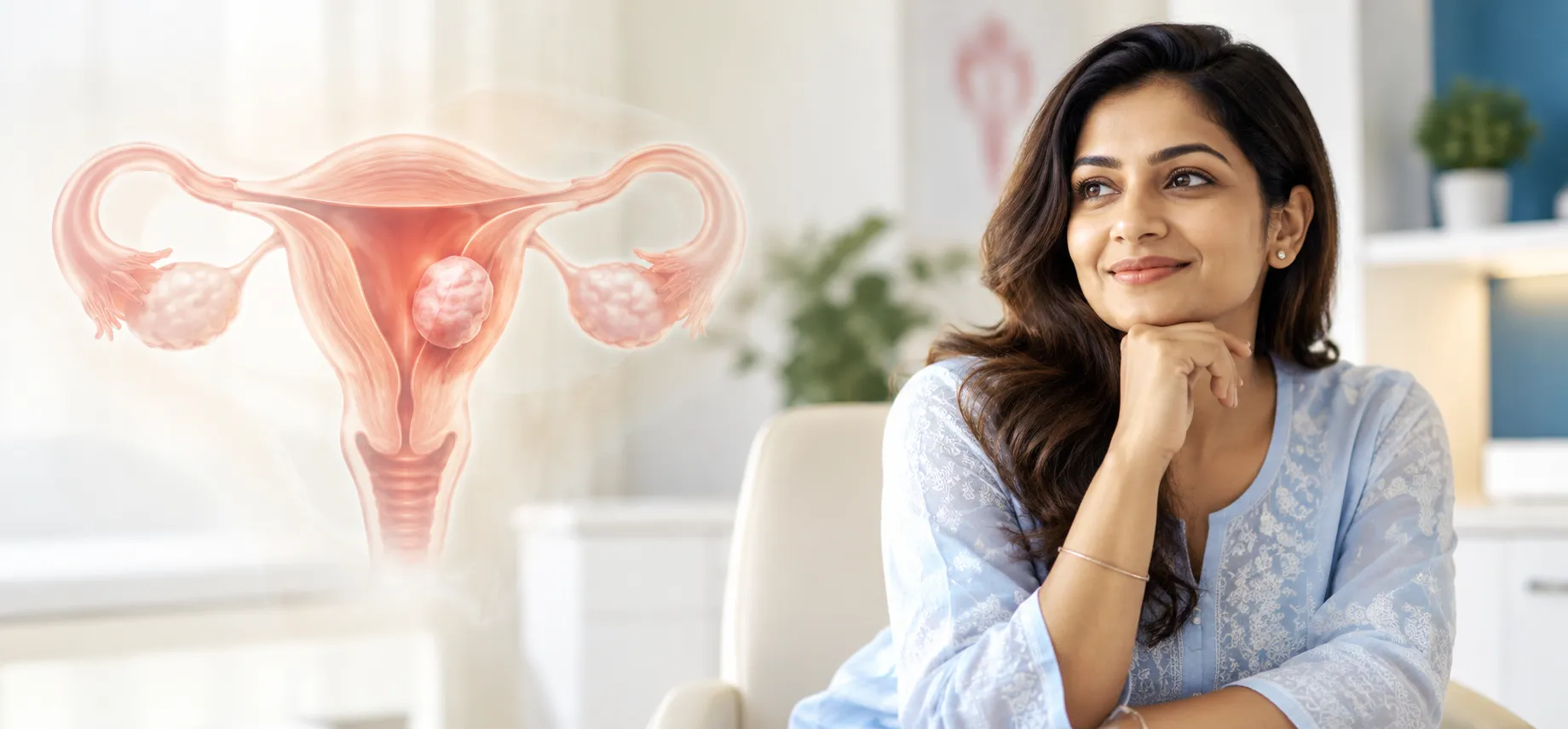
Painful periods that force you to stay in bed, pain during intercourse, pelvic pain between periods and months or years of trying to conceive without success: for many women these are the signs of endometriosis, a condition that is often missed for years because the pain is dismissed as normal. It affects about 1 in 10 women of reproductive age. This guide explains what endometriosis is, how it is diagnosed, how it relates to fertility, and the homeopathic medicines traditionally considered, along with how our specialists approach each woman individually.
Wondering which of these medicines is right for you?
Every person with endometriosis is different, and so is the medicine that works best for them. To discover the best-suited homeopathic medicines for endometriosis for you, consult our experts. They will study your symptoms, your past treatment history and your personality, and then find the homeopathy medicines that suit you best.
Call +91 8080 850 950 for a 1:1 personal consultation with our experts today.
Endometriosis: quick answers
- What is it? A condition in which tissue similar to the lining of the womb grows outside it, on the ovaries, tubes and pelvic lining, causing inflammation and pain.
- Common symptoms: Very painful periods, pelvic pain, pain during sex, heavy periods, pain with bowel movements and difficulty conceiving.
- Diagnosis: Pelvic examination, ultrasound or MRI and, in some women, a laparoscopy; delay of 7 to 10 years in diagnosis is common.
- Fertility: Many women with endometriosis conceive, but the condition is found in a good share of women with infertility.
- Our approach: Meet our specialists for your personal best homeopathic remedy and a plan that supports your recovery and fertility.
About endometriosis
During each menstrual cycle, the lining of the womb thickens and then sheds as a period. In endometriosis, similar tissue is found outside the womb, most often on the ovaries, fallopian tubes and the lining of the pelvis, and sometimes on the bowel and bladder. This tissue responds to hormones every month, bleeds and causes inflammation, scarring and adhesions, and ovarian cysts called endometriomas (“chocolate cysts”).
The pain is often severe and not relieved by usual painkillers, and it may start a few days before the period and last throughout. Endometriosis can also cause heavy bleeding, fatigue, bloating, pain on passing stool or urine during periods and, in some women, trouble conceiving because of scarring, inflammation and reduced ovarian reserve. The degree of pain does not always match the extent of the disease.
The cause is not fully understood; theories include backward flow of menstrual blood, hormonal and immune factors and genetic tendency. Standard care includes pain management, hormonal treatment and surgery in some cases. Our specialists take a detailed history of your cycles, pain, reports and temperament and plan a personal homeopathic approach to support comfort, hormonal balance and fertility alongside your current treatment.
Common symptoms of endometriosis
Symptoms vary from person to person. Common ones include:
- Painful periods that are severe and get worse over time
- Pelvic or lower back pain between periods
- Pain during or after intercourse
- Heavy or prolonged periods, or spotting between periods
- Pain during bowel movements or urination around the period
- Fatigue, bloating, nausea and mood changes
- Difficulty getting pregnant
Causes and risk factors of endometriosis
There is rarely a single cause. Factors that may contribute include:
- Backward flow of menstrual blood through the tubes into the pelvis
- Hormonal factors, especially oestrogen, that promote growth of the tissue
- Immune system and inflammation differences
- Family history, with a higher risk if a mother or sister is affected
- Early start of periods, short cycles and long, heavy periods
- Surgical scars or spread through blood or lymph in some cases
- Environmental and lifestyle factors under study
Warning signs and when to get urgent help
Please go to the nearest hospital emergency department immediately if there is:
- Sudden severe lower abdominal pain, with fainting, vomiting or fever (possible ruptured or twisted cyst)
- Very heavy bleeding soaking a pad in under an hour, with dizziness
- Pain with a positive pregnancy test, or a missed period with severe one-sided pain (possible ectopic pregnancy)
- Blood in the stool or urine, or inability to pass stool or urine
- Severe shoulder-tip pain with abdominal pain
- High fever with pelvic pain
Homeopathic medicines for endometriosis
The medicines below are commonly considered in homeopathy for endometriosis, with the symptom picture traditionally associated with each. They are listed for general information, not as a prescription.
(1) Pulsatilla nigricans: Delayed, scanty or changeable periods with cramping pain, a weepy, mild temperament, thirstlessness and relief from fresh air and gentle motion.
(2) Sepia officinalis: Bearing-down pain in the pelvis as if everything would fall out, with irritability, indifference and a tendency to leucorrhoea and tiredness.
(3) Lachesis muta: Left-sided ovarian pain that is worse before the period and relieved with the flow, with hot flushes, jealousy and talkativeness.
(4) Nux vomica: Painful, irregular periods with cramping, irritability, constipation and chilliness, in driven, impatient, sedentary persons.
(5) Magnesia phosphorica: Spasmodic, cramping menstrual pains that are relieved by heat, pressure and bending double, worse on the right side.
(6) Calcarea carbonica: Profuse, early, long periods in chilly, overweight women who tire easily, with cold, damp feet and a tendency to fear.
(7) Sabina: Haemorrhage with bright red, clotted blood and pain that goes from the back to the pubic bone, with cramps and an aversion to heat.
(8) Platina: Intense sensitivity of the genital organs, early, profuse, dark clotted periods with bearing-down pain, and pride or haughtiness.
(9) Cimicifuga racemosa: Cramping, neuralgic pain across the abdomen and back with irregular periods, restlessness and mood swings, with low spirits.
(10) Belladonna: Sudden, throbbing, hot pain with bright red bleeding, a hot, flushed face and sensitivity to jarring and touch.
Homeopathic treatment of endometriosis at Welling Homeopathy
These are only basic indications – many more homeopathic medicines are used for endometriosis, and the right one is chosen after detailed case-taking by an experienced doctor.
Homeopathy is offered here as individualised care alongside your current treatment. Please do not stop, skip or change any prescribed medicine on your own; any change should be discussed with the doctor who prescribed it and with our specialists. Please keep your scans, hormone tests and any hormonal or surgical plan on track.
Meet our specialists to find your personal best homeopathic remedy and a care plan that supports your recovery. Please do not delay: the earlier you begin, the better. Read about our homeopathic care for endometriosis, contact a Welling clinic or call +91 80 80 850 950 for a consultation in person or online.
Self-care and lifestyle tips
These measures support general health and may ease symptoms, but they do not replace treatment when it is needed.
- Use a warm water bottle or heating pad on the lower abdomen and back during painful days.
- Exercise regularly with walking, yoga, swimming or stretching, which can reduce pain and improve mood.
- Eat a balanced, anti-inflammatory style diet rich in vegetables, fruits, whole grains, pulses, nuts and seeds, and limit processed food, red meat and excess caffeine.
- Keep a pain and symptom diary of your cycle, pain level and bleeding to share at your consultation.
- Take painkillers only as advised, and tell our specialists about all medicines and hormonal treatment you use.
- Manage stress and sleep, as stress can worsen pain perception.
- If planning pregnancy, share your reports, scans and treatment history; do not delay, since timing matters for fertility.
Frequently asked questions about endometriosis
1. What are the first symptoms of endometriosis?
Painful periods that get worse over time, pelvic pain between periods, pain during intercourse, heavy bleeding and difficulty conceiving.
2. How is endometriosis diagnosed?
Through a pelvic examination, ultrasound or MRI, and sometimes laparoscopy. Many women wait years for a diagnosis, so persistent period pain deserves attention.
3. Does endometriosis cause infertility?
It can, through scarring, inflammation and reduced ovarian reserve, but many women with endometriosis conceive naturally. Early assessment helps.
4. Is endometriosis the same as fibroids or PCOS?
No. Fibroids are growths in the muscle of the womb, PCOS is a hormonal condition with ovulation problems, and endometriosis is womb-lining-like tissue outside the womb, although they can occur together.
5. Can homeopathy help in endometriosis?
Homeopathy is offered as individualised care alongside your current treatment. Our specialists study your cycles, pain, reports and temperament to choose your personal remedy and a plan that supports your recovery and fertility.
6. Does pregnancy get rid of endometriosis?
Pregnancy often brings a break from symptoms, but endometriosis can return afterwards, and pregnancy is not a treatment.
7. What is a chocolate cyst?
An endometrioma, a cyst on the ovary filled with old blood, which looks dark brown like chocolate. It needs assessment because of its effect on pain and fertility.
Related Reading
- Homeopathy Treatment For Endometriosis
- Best Homeopathy Treatment of Endometriosis
- How Endometriosis Leads to Infertility and Miscarriages
- Endometriosis – A Common Cause for Infertility
- How To Get Pregnant With Endometriosis Naturally?
- Treatment of Endometriosis: Causes, Symptoms, Diagnosis
- 10 Best Homeopathic Medicines for Treatment of Leucorrhea
More guides you may find useful
- 10 Best Homeopathic Medicines for Treatment of Azoospermia
- 10 Best Homeopathic Medicines for Treatment of Leucorrhea
- 10 Best Homeopathic Medicines for Menopause Symptoms
To consult Welling Homeopathy experts, call +91 80 80 850 950.
Disclaimer: this page is for information only and is not a substitute for professional medical advice, diagnosis or treatment. Results vary from person to person.
